English
 日本語
日本語 한국어
한국어 français
 Deutsch
 Español
 italiano
 русский
 العربية
 ไทย
ไทย हिंदी
हिंदी
As electronic products continue to evolve toward higher integration, higher power density, and further miniaturization, the performance demands placed on encapsulation, insulation, and potting materials keep rising. Conventional bisphenol-A epoxy resins, while offering strong cost and general-purpose performance, increasingly fall short in weatherability, electrical insulation, and UV resistance for high-end electronic applications. Cycloaliphatic epoxy resin, thanks to its distinctive molecular structure, is becoming an increasingly important choice across the electronics industry. As a company dedicated to cycloaliphatic epoxy resins and related solutions, Tetra New Materials would like to share, through this article, the value and outlook of this material in electronic applications with our industry peers.
Cycloaliphatic epoxy resin refers to a class of epoxy resins in which the epoxy group is directly attached to an aliphatic ring structure (such as a cyclohexane ring), as opposed to bisphenol-A or bisphenol-F type epoxy resins, which are built on an aromatic ring backbone. This structural difference gives rise to several notable characteristics:
· No benzene-ring chromophore: The molecule lacks the conjugated aromatic ring system found in bisphenol-A structures, so it resists yellowing and degradation under UV exposure, giving it excellent weatherability and UV resistance.
· High crosslink density: Cycloaliphatic epoxy resins typically have higher functionality, forming a dense three-dimensional network after curing that provides excellent mechanical strength and chemical resistance.
· Outstanding electrical insulation: High volume resistivity, low dielectric loss, and strong arc and tracking resistance make it an ideal base material for high-voltage insulation components.
· Low viscosity, easy processing: Compared with some solid epoxy resins, cycloaliphatic epoxy resins typically have lower viscosity at room temperature, making them well suited to potting, impregnation, and precision casting processes.
To understand why cycloaliphatic epoxy resin performs so well in electronic applications, it helps to look at the material at the molecular level.
The core reactive group in any epoxy resin is the three-membered epoxy (oxirane) ring, whose reactivity comes from ring strain and the polarity of the oxygen atom. The performance differences between epoxy resin types largely stem from the backbone structure to which the epoxy group is attached:
· Bisphenol-A/F epoxy resins: The epoxy group is connected via a glycidyl ether linkage to the benzene ring of the bisphenol structure, so the molecular chain contains an extensive conjugated aromatic system.
· Cycloaliphatic epoxy resins: The epoxy group is fused directly onto an aliphatic ring (most typically a cyclohexane ring), forming an "epoxidized cycloaliphatic olefin" structure. Rather than being built through a glycidyl ether linkage, it is produced by direct epoxidation of an olefinic double bond. A common industry example is 3,4-epoxycyclohexylmethyl 3',4'-epoxycyclohexanecarboxylate (often referred to by its representative structure, ERL-4221 type), whose molecule carries an epoxycyclohexyl group at each end, joined by an ester linkage in the middle, with no benzene ring anywhere in the molecule.
This structural difference leads to two key consequences. First, because there is no conjugated benzene-ring chromophore, the material's UV absorption is markedly reduced and its rate of photo-oxidative degradation drops sharply — this is the molecular-level reason cycloaliphatic epoxy resin resists weathering and yellowing. Second, the ring strain and electron-cloud distribution of the cycloaliphatic epoxy group differ from those of the glycidyl-ether type, giving it higher ring-opening polymerization reactivity under cationic initiation.
Cycloaliphatic epoxy resins are typically cured through one of two mechanisms, which lead to different network structures and resulting properties:
1. Cationic ring-opening polymerization (UV curing / thermal cationic curing)
Under the action of photoinitiators such as sulfonium or iodonium salts, or thermal cationic initiators, the initiator decomposes to generate a strong protonic acid or Lewis-acid active center, which attacks the oxygen atom of the epoxy ring, protonating and opening it. The resulting carbocation (or oxonium ion) then reacts with the next epoxy molecule, propagating the chain until a three-dimensional network is formed. Because the cycloaliphatic epoxy group has relatively high ring strain and an electron-cloud distribution favorable to electrophilic attack, its cationic polymerization reactivity is generally much higher than that of the glycidyl-ether type. This is an important reason why cycloaliphatic epoxy resins are widely used in UV-curable formulations (such as LED encapsulants and optical coatings) — curing is fast, with crosslinking completed in seconds to minutes.
2. Anhydride/amine curing (thermal curing)
In power and electrical casting applications, cycloaliphatic epoxy resins are more commonly cured thermally with anhydride-type curing agents (such as methyltetrahydrophthalic anhydride or hexahydrophthalic anhydride) together with an accelerator. In this mechanism, the anhydride first reacts with trace hydroxyl groups or the accelerator in the system to generate a carboxylate ion, which then undergoes a ring-opening esterification reaction with the epoxy ring, alternately generating ester linkages and new hydroxyl groups. This cycle allows the molecular chain to grow and crosslink continuously, eventually forming a dense network rich in ester linkages. This curing system releases heat relatively gently and has a low volumetric shrinkage, making it particularly suitable for large-volume cast components (such as current transformers and insulators), effectively reducing internal stress and the risk of cracking during cure.
Molecular Structural Feature | Corresponding Macroscopic Property |
No benzene-ring conjugated system | UV resistant, weatherable, resists yellowing |
Rigid cycloaliphatic backbone + high crosslink density | High glass transition temperature, high hardness, good heat resistance |
Ester linkages in the molecule (anhydride-cured systems) | Some sensitivity to hydrolysis; moisture protection should be considered in formulation |
Low epoxy equivalent weight, high functionality | Relatively higher cure shrinkage; needs to be balanced with fillers |
No polar benzene ring, symmetric structure | Low dielectric constant, low dielectric loss, high volume resistivity |
The table below shows typical property ranges for cured cycloaliphatic epoxy resin (anhydride-cured system). Actual values vary by grade, curing agent system, and filler formulation, and are provided here for technical reference only:
Property | Typical Range | Reference Test Standard |
Glass transition temperature (Tg) | 120–150 °C | GB/T 19466 / DSC method |
Volume resistivity | 10¹⁴–10¹⁶ Ω·cm | GB/T 1410 |
Dielectric constant (1 MHz) | 3.0–3.5 | GB/T 1409 |
Dielectric loss tangent (1 MHz) | 0.005–0.02 | GB/T 1409 |
Comparative tracking index (CTI) | ≥600 V | IEC 60112 |
Water absorption (24 h) | 0.1%–0.3% | GB/T 1462 |
Heat deflection temperature | 110–140 °C | GB/T 1634 |
These parameters explain why cycloaliphatic epoxy resin is favored in high-voltage insulation and precision electronic encapsulation: high volume resistivity and low dielectric loss ensure long-term electrical safety; a high CTI value means the material resists tracking-induced surface flashover in damp, contaminated outdoor environments; and moderate water absorption combined with good heat-deflection performance ensures long-term dimensional and performance stability of the device through temperature and humidity cycling.
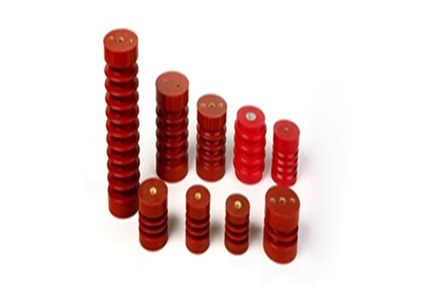
In current transformers, insulators, surge arresters, switchgear, and other high-voltage power equipment, materials must withstand long-term outdoor exposure while enduring electric field stress and UV radiation. Cycloaliphatic epoxy resin, with its excellent tracking resistance (high CTI) and weatherability, effectively prevents surface carbonization and electrical breakdown, and is widely used in cast outdoor high-voltage insulation components.
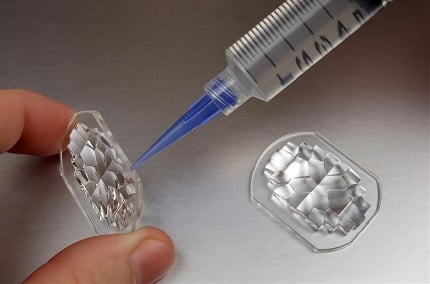
LED devices place extremely high demands on encapsulant transparency, yellowing resistance, and heat resistance. Conventional aromatic epoxy resins tend to yellow under prolonged heat and light exposure, causing luminous efficiency to decline. Because cycloaliphatic epoxy resin lacks a benzene-ring chromophore, it offers high initial light transmittance and a low yellowing index over long-term use, better preserving the optical performance and service life of LED devices. It is a preferred material for high-power LED and UV LED encapsulation.
In the packaging of integrated circuits, sensors, capacitors, and other semiconductor and passive components, materials must balance electrical insulation, resistance to humid-heat aging, and dimensional stability. Cured cycloaliphatic epoxy resin exhibits relatively low water absorption and good performance under humid-heat cycling, and, paired with an appropriate curing agent system, can meet demanding reliability test requirements such as Temperature-Humidity-Bias (THB) testing and thermal cycling.
Cycloaliphatic epoxy resin is also commonly used as the matrix resin for power composite materials such as insulators and bushings. When combined with reinforcing materials like glass fiber, it delivers both excellent mechanical properties and long-term outdoor durability, and is widely used in integrated structural-insulation components for transmission and transformation equipment.
Performance Dimension | Cycloaliphatic Epoxy Resin | Bisphenol-A Epoxy Resin |
UV/weathering resistance | Excellent, resists yellowing | Poor; prone to yellowing under prolonged light exposure |
Electrical insulation | High volume resistivity, low dielectric loss | Good, but tracking resistance is average |
Weatherability | Excellent, suited to long-term outdoor use | Average; requires additional protection |
Processing viscosity | Generally lower, suited to precision casting | Varies by grade |
Typical applications | Outdoor insulation, LED encapsulation, high-voltage electrical equipment | Copper-clad laminates, structural adhesives, general potting |
It is worth noting that cycloaliphatic epoxy resin is not intended to fully replace bisphenol-A epoxy resin. Rather, it offers a more targeted solution for niche applications with specific requirements for weatherability, electrical insulation, and optical clarity. In practice, the two are also often blended or modified together to balance performance and cost.
When applying cycloaliphatic epoxy resin to a specific electronic product, companies generally need to weigh the following factors:
1. Matching the curing system: Cycloaliphatic epoxy resins are typically cured using cationic photocuring or anhydride-based systems. The choice of curing agent and accelerator significantly affects cure speed, glass transition temperature, and final performance, and should be tailored to the specific process conditions.
2. Filler and formulation optimization: Adding thermally conductive fillers, flame-retardant fillers, or weathering additives can further enhance the material's heat dissipation, flame retardancy, and long-term stability to meet the differentiated needs of various applications.
3. Process compatibility: From potting and casting to impregnation molding, different processes place different demands on resin viscosity, cure window, and shrinkage rate, so material selection needs to be closely aligned with the actual production process.
Tetra New Materials has long focused on the research, development, and production of cycloaliphatic epoxy resins, committed to providing customers in power and electrical equipment, optoelectronic encapsulation, semiconductors, and other electronics-related fields with one-stop service — from resin products to formulation solutions. We understand that the ultimate value of a material's performance lies in how reliably it integrates into a customer's actual process and application. That is why we remain application-driven, continuously optimizing our product performance and technical service capabilities to help our partners meet the electronics industry's ever-rising demands for reliability, durability, and precision processing.
With its combined advantages of weatherability, insulation, transparency, and processability, cycloaliphatic epoxy resin is playing an increasingly indispensable role across many segments of the electronics industry. Whether in outdoor high-voltage insulation, LED optoelectronic encapsulation, or the reliability protection of semiconductor components, this class of materials continues to drive electronic products toward higher performance and longer service life. Tetra New Materials looks forward to working alongside industry partners, leveraging our materials expertise and solution capabilities to help customers achieve greater breakthroughs in electronic applications.
If you would like to learn more about Tetra New Materials' cycloaliphatic epoxy resin products and customized solutions, please feel free to reach out to our technical team.