English
 日本語
日本語 한국어
한국어 français
 Deutsch
 Español
 italiano
 русский
 العربية
 ไทย
ไทย हिंदी
हिंदी
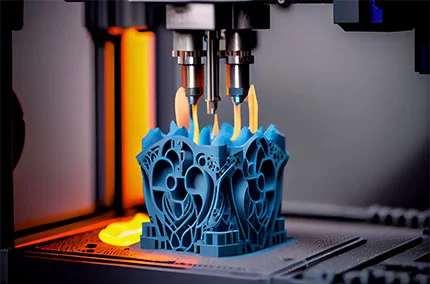
With the rapid development of additive manufacturing, 3D printing technologies are transitioning from rapid prototyping to functional and end-use production. Among various technologies, SLA 3D printing (Stereolithography) stands out for its exceptional precision, surface quality, and design flexibility.
At the core of SLA performance lies the material system—particularly photopolymer resins. In recent years, cycloaliphatic epoxy resin has emerged as a high-performance alternative to traditional acrylate systems, offering enhanced mechanical properties, dimensional stability, and long-term reliability.
SLA is a vat photopolymerization process that uses a UV laser to cure liquid resin layer by layer into solid parts.
Key characteristics of SLA technology include:
High dimensional accuracy (fine feature resolution)
Smooth, near-injection-molded surface finish
Capability to produce complex geometries
Fast iteration for prototyping and low-volume production
These advantages make SLA widely used in industries such as electronics, medical devices, automotive, and precision engineering.
Traditional SLA materials are typically based on acrylate photopolymers, which offer fast curing but present several limitations:
High polymerization shrinkage
Internal stress leading to warpage
Limited toughness and long-term stability
These challenges restrict their use in engineering-grade and functional applications, especially where precision and durability are critical.
1. Unique Polymerization Mechanism
Unlike acrylates, cycloaliphatic epoxy resins cure via a cationic ring-opening mechanism, resulting in:
Lower volumetric shrinkage
Reduced internal stress
Improved dimensional stability
This makes them particularly suitable for high-precision SLA 3D printing applications.
2. Key Advantages in SLA 3D Printing
Cycloaliphatic epoxy resin systems offer several critical performance benefits:
Low Shrinkage & High Accuracy
Ring-opening curing reduces shrinkage compared to C=C polymerization
Minimizes warpage and improves dimensional consistency
No Oxygen Inhibition
Enables more complete surface curing
Improves surface quality and interlayer adhesion
High Crosslink Density
Enhances mechanical strength and structural integrity
Provides better heat resistance and chemical stability
Excellent Processability
Low viscosity for improved flow and printing efficiency
Suitable for complex geometries and fine structures
Dark Cure Capability
Continued curing after UV exposure
Ensures uniform internal structure and better final properties
3. Mechanical and Thermal Performance
Compared with conventional SLA resins, cycloaliphatic epoxy systems deliver:
Balanced strength and toughness
Improved impact resistance
Higher glass transition temperature (Tg)
Better long-term thermal stability
These properties enable a shift from visual prototyping to functional component manufacturing.
1. High-Precision Functional Parts
Precision mechanical components
Structural parts requiring dimensional stability
Assembly validation and tolerance testing
2. Electronic and Electrical Applications
Insulating structural components
Connector housings
Encapsulation and microelectronic parts
3. Industrial Prototyping and Small-Batch Production
Functional prototypes with engineering-grade performance
Customized parts with consistent repeatability
4. Advanced Manufacturing Fields
Medical devices and dental models
Automotive lightweight components
Aerospace precision parts
Jewelry casting and mold fabrication
Cycloaliphatic epoxy resins can be further optimized through formulation design:
Toughness enhancement using flexible epoxy systems (e.g., adipate-based structures)
Hybrid systems (cationic + free radical) for balancing speed and performance
Low-chlorine, high-purity grades for electronic applications
This flexibility allows manufacturers to develop customized SLA resin systems tailored to specific end-use requirements.
As additive manufacturing evolves, SLA is no longer limited to appearance models. The integration of cycloaliphatic epoxy resin is enabling:
Transition toward engineering-grade materials
Improved reliability for end-use parts
Greater adoption in electronics and high-performance industries
This shift highlights the importance of advanced resin systems in unlocking the full potential of 3D printing technologies.
Cycloaliphatic epoxy resin represents a critical advancement in SLA 3D printing materials. By combining low shrinkage, high precision, and superior mechanical and thermal properties, it addresses the limitations of traditional photopolymers and enables the production of functional, high-performance components.
As industries increasingly demand precision, reliability, and customization, cycloaliphatic epoxy systems will continue to play a key role in the next generation of additive manufacturing solutions.


![TTA3150: Poly[(2-oxiranyl)-1,2-cyclohexanediol] -2-ethyl-2-(hydroxymethyl)-1,3-propanediol Ether](/uploads/image/20221122/19/1-2-cyclohexane-diol.jpg "TTA3150: Poly[(2-oxiranyl)-1,2-cyclohexanediol] -2-ethyl-2-(hydroxymethyl)-1,3-propanediol Ether")