English
 日本語
日本語 한국어
한국어 français
 Deutsch
 Español
 italiano
 русский
 العربية
 ไทย
ไทย हिंदी
हिंदी
```html
In the rapidly advancing world of industrial photopolymerization, formulation chemists frequently battle a classic trade-off: processing viscosity versus cured-film performance. High-performance oligomers, such as polyurethane acrylate (PUA), are widely favored in radiation-curable coatings, electronic encapsulation materials, and advanced 3D printing because of their toughness and adhesion. However, their inherently high viscosity makes uniform application, fast leveling, and processing highly challenging. Traditional reactive diluents often solve the viscosity problem only at the expense of shrinking the cured product or drastically reducing its thermal and mechanical resilience.
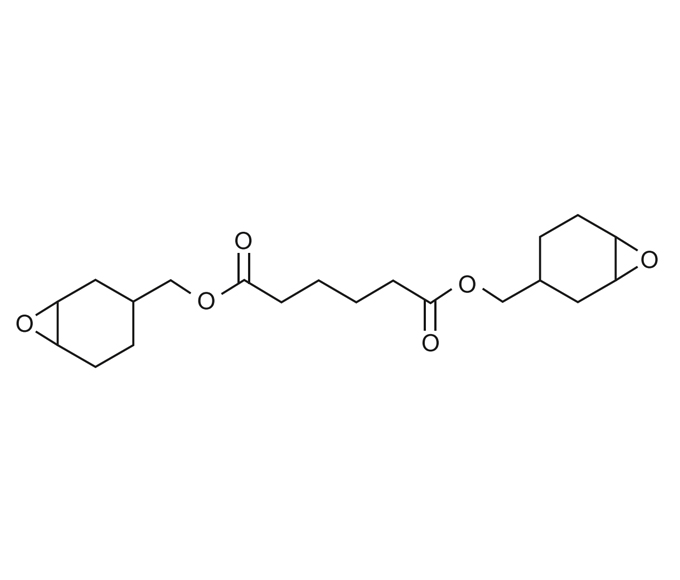
To overcome these processing bottlenecks, formulation engineers are turning to advanced alicyclic chemistry. Utilizing a tailored speciality resin monomer allows developers to systematically reduce formulation viscosity while simultaneously upgrading mechanical toughness and thermal resistance. As a pioneering global cycloaliphatic epoxy resin manufacturer established in 2004, Tetra specializes in the R&D and production of advanced alicyclic structures. Among its specialized portfolio, Tetra's TTA26 (Bis(3,4-Epoxycyclohexylmethyl) Adipate, CAS 3130-19-6) stands out as a critical solution for high-performance cationic UV curing and hybrid thermal systems.
Polyurethane acrylate oligomers form the backbone of many high-end UV-curable inks, coatings, and structural matrices due to their exceptional elastomeric properties. Yet, their molecular structure leads to strong intermolecular hydrogen bonding, creating an exceptionally thick, high-viscosity fluid at room temperature. In precision applications like UV stereolithography (SLA/DLP) 3D printing or microelectronic potting, high viscosity causes catastrophic defects: slow resin self-leveling, trapped micro-air bubbles, uneven coating thicknesses, and poor fiber wet-out in composite manufacturing.
To make these systems workable, adding a viscosity-reducing agent is non-negotiable. While free-radical acrylic monomers are commonly used, they suffer heavily from oxygen inhibition during curing, resulting in a sticky surface layer and high volumetric shrinkage. Cationic UV curing systems completely eliminate oxygen inhibition, but they require a highly compatible, low-viscosity speciality resin matrix that can participate in ring-opening polymerization without compromising the core polymer network. This is precisely where the unique chemical architecture of cycloaliphatic epoxies provides a distinct engineering advantage.
TTA26 features a highly specialized chemical structure incorporating an adipate ester linkage between two cycloaliphatic epoxy rings. This configuration results in an incredibly low baseline viscosity that functions as a highly efficient reactive diluent. When integrated into heavy PUA or thick epoxy oligomer matrices, it breaks down intermolecular resistance, dramatically lowering the overall viscosity of the uncured fluid without requiring volatile organic solvents (VOCs).
The practical performance of TTA26 is backed by rigorous rheological engineering data. When tested using a DHR-25°C rotary rheometer, the fluid dynamics demonstrate highly predictable and powerful dilution behavior:
Threshold Effect: The rheological profile proves that TTA26 possesses an exceptional, non-linear dilution capability.
Critical Concentration: A distinct and highly obvious dilution effect is unlocked the moment the addition amount of TTA26 within the formula exceeds 20%.
Processing Freedom: Pushing the concentration past this 20% threshold allows formulation chemists to drop the viscosity of heavy PUA systems into optimal ranges for rapid spraying, jetting, or high-speed 3D printing vat replenishment.
Because it is fully reactive, every molecule of TTA26 binds permanently into the cross-linked matrix during UV exposure, ensuring zero outgassing, zero VOC emissions, and stable long-term material properties.
Standard reactive diluents almost always degrade the thermal threshold (Glass Transition Temperature, or Tg) of the final cured material, making it soft and prone to mechanical failure under heat. TTA26 defies this limitation. While its elongated adipate chain gives it excellent internal flexibility, its cycloaliphatic rings maintain a rigid, highly cross-linked network upon curing. This dual-action nature solves the classic "brittleness" issue common to other alicyclic epoxies (such as TTA21) without sacrificing thermal stamina.
To demonstrate its thermal reliability, look at the definitive cure data evaluated via Differential Scanning Calorimetry (DSC). When formulated in an anhydride system, the thermal performance is highly reliable:
| Testing Parameter | Tested Formula Composition | Tested Conditions (DSC) | Verified Engineering Value |
|---|---|---|---|
| Glass Transition Temperature (Tg) | TTA26 : MHHPA : AO-4 = 100 : 84 : 1 | 20°C/min, ramping from 40°C up to 250°C | 133°C |
| Dilution Activation Threshold | TTA26 blended with Polyurethane Acrylate | DHR Rotary Rheometer at stable 25°C | >20% addition for obvious effect |
| Curing Mechanisms | Pure or blended monomer | UV Cationic, Anhydride, or Thermal Cationic | Multi-mode curing compatibility |
A verified Tg of 133°C ensures that even when this speciality resin is used heavily as a diluent, the resulting component retains its rigid structural stability and electrical insulation properties under severe operational temperatures, making it a reliable choice for automotive electronics and high-load aerospace composites.
In high-end manufacturing, TTA26 is rarely used in total isolation; rather, it serves as a powerful performance modifier. For instance, the industry-standard cycloaliphatic epoxy, TTA21, yields exceptional hardness and weatherability but can be overly brittle in thin-film applications or under intense thermal shock. Because TTA26 possesses similar core electrical insulation and weather resistance properties to TTA21, they blend perfectly.
The longer molecular chain length of TTA26 acts as an internal cushion within the tight TTA21 matrix. By co-blending TTA21 and TTA26, formulation engineers can precisely tune the balance between hardness and flexibility. This synergistic blend is highly compatible with multiple industrial curing methods:
UV SLA/DLP Printing: Maximizes precision, ensures low volumetric shrinkage, and prevents part cracking during post-cure.
Anhydride Curing: Optimizes large-scale electrical casting and potting, ensuring void-free encapsulation.
Thermal Cationic Curing: Enables deep-layer shadow curing in complex microelectronic assemblies where UV light cannot fully penetrate.
Optimizing cationic UV resins requires materials that can bridge the gap between processing fluidity and high-temperature mechanical performance. As detailed by rheological and DSC testing, TTA26 (CAS 3130-19-6) solves this engineering dilemma by offering a robust dilution effect at addition levels above 20%, high cured flexibility, and an impressive Tg of 133°C. For industrial formulators seeking an advanced speciality resin matrix that eliminates oxygen inhibition, lowers shrinkage, and enhances toughness, balancing your formula with advanced alicyclic monomers is the ultimate path forward. To find the ideal material configuration for your production pipeline, check out our comprehensive product catalog or contact the technical application team at Jiangsu Tetra New Material Technology Co., Ltd. today.
TTA26 functions as a low-viscosity, fully reactive diluent and flexibility modifier that participates directly in cationic ring-opening polymerization without releasing volatile organic compounds.
Rheological testing via a DHR rotary rheometer at 25°C confirms that a distinct and highly obvious dilution effect occurs when the addition amount of TTA26 in the formula exceeds 20%.
When cured within a standard acid anhydride system (TTA26:MHHPA:AO-4 = 100:84:1), DSC testing verifies that the glass transition temperature reaches a high thermal threshold of 133°C.
TTA26 contains an increased molecular chain length due to its internal adipate ester linkage, which introduces structural flexibility and impact resistance into the cured polymer network.
No. Because TTA26 cures via a cationic mechanism rather than a free-radical mechanism, it is entirely unaffected by oxygen inhibition, ensuring a completely dry, non-tacky surface cure in ambient air.
It is widely utilized in high-precision UV SLA 3D printing resins, outdoor electrical insulation coatings, advanced composites for new energy vehicles, and deep-layer microelectronic encapsulation materials. Learn more about our manufacturing capabilities on our About Us page.
```