English
 日本語
日本語 한국어
한국어 français
 Deutsch
 Español
 italiano
 русский
 العربية
 ไทย
ไทย हिंदी
हिंदी
In 2026, microelectronics packaging engineers are working with geometries and thermal loads that expose every weakness in the encapsulation material. Flip-chip assemblies, power modules, and advanced system-in-package designs are operating at higher power densities, with smaller gap clearances between the die and the substrate, and under thermal cycling profiles that are more aggressive than the conditions that previous-generation encapsulants were qualified against. The failure modes that result — voiding from incomplete gap fill, delamination from thermal cycling stress, moisture ingress through unfilled capillary paths, and electrical leakage from ionic contamination — are not recoverable in the field. They generate returns, liability exposure, and requalification costs that compound across the installed base of a high-volume electronics program.
The encapsulation resin that addresses these failure modes must satisfy three requirements simultaneously: low enough viscosity to penetrate micro-gaps and fill complex geometries before gelation, high enough crosslink density after cure to resist the mechanical stress of thermal cycling without cracking or delaminating, and sufficient purity to avoid the ionic contamination that drives leakage current and corrosion failures in sensitive semiconductor devices. CAS 5026 74 4 — N,N-Diglycidyl-4-glycidyloxyaniline, supplied by Tetrawill as TTA500 — is a low-viscosity trifunctional epoxy resin that addresses all three requirements through its molecular architecture: three epoxide groups per molecule that contribute to high crosslink density and heat resistance after cure, a viscosity of 1500 to 3000 mPa·s at 25°C that supports capillary flow into tight clearances, and a published specification for epoxy equivalent weight and viscosity that provides the incoming QC anchor for semiconductor packaging materials procurement programs.
The failure modes that drive the selection of an underfill epoxy resin for advanced microelectronics packaging are not independent — they interact in ways that make the material selection decision more complex than a single-parameter optimization.
The primary mechanical failure mode in flip-chip and power module packaging is fatigue cracking of the solder joints and interconnects driven by the coefficient of thermal expansion mismatch between the silicon die, the solder bumps, and the organic substrate. Each thermal cycle — from the operating temperature of the device to the ambient temperature during power-off — produces a shear stress at the solder joint that accumulates with each cycle until the joint cracks and the electrical connection fails. The encapsulation material that fills the gap between the die and the substrate — the underfill — redistributes this shear stress from the solder joints to the encapsulant mass, reducing the stress concentration at the joint and extending the fatigue life of the assembly.
The effectiveness of the underfill in redistributing the thermal cycling stress depends on its modulus, its adhesion to the die and substrate surfaces, and its resistance to cracking under the accumulated stress of thousands of thermal cycles. A cured encapsulant with a high crosslink density — produced by the trifunctional epoxide architecture of CAS 5026 74 4 — provides the modulus and crack resistance that thermal cycling reliability requires.
Voids in the cured encapsulant — air pockets trapped during the filling process — are stress concentration points that initiate cracking under thermal cycling and moisture absorption. They also create capillary paths for moisture ingress that accelerate corrosion of metal contacts and conductor traces. The void content of the cured encapsulant is determined primarily by the viscosity of the resin at the dispense temperature and the surface energy of the die and substrate surfaces — a lower viscosity resin fills the gap more completely before gelation, reducing the void content and the associated reliability risks.
Ionic contamination in the encapsulant — particularly chloride ions from the epichlorohydrin synthesis route of glycidyl amine epoxy resins — can form conductive pathways in the presence of moisture, increasing the leakage current between adjacent conductors and accelerating the corrosion of bond wire contacts and metallization. For semiconductor packaging materials applications where the conductor pitch is measured in tens of microns and the leakage current specification is measured in nanoamperes, ionic contamination in the encapsulant is a reliability-critical parameter that must be controlled through the incoming material specification.
The performance logic of TTA500 in advanced encapsulation and underfill-style applications derives from two structural features of the N,N-Diglycidyl-4-glycidyloxyaniline molecule: the low-viscosity liquid state at room temperature that enables capillary flow into tight clearances, and the trifunctional epoxide architecture that produces a high-crosslink-density network after cure.
.png "/uploads/image/2026/06/10/5026 74 4(1).png")
The viscosity of TTA500 at 25°C — 1500 to 3000 mPa·s — is in the range that supports capillary-driven flow into narrow gap clearances when the resin is dispensed at the edge of the assembly and drawn into the gap by surface tension. The capillary flow rate depends on the gap height, the surface energy of the die and substrate surfaces, and the viscosity of the resin at the dispense temperature. For a given gap geometry and surface energy, a lower viscosity resin fills the gap faster and more completely than a higher viscosity resin, reducing the void content and the time required for the filling process.
For applications where the dispense temperature can be elevated above 25°C — which reduces the viscosity of the resin and improves the capillary flow rate — the viscosity at the dispense temperature should be measured and specified in the process control plan, not just the room-temperature viscosity. The published viscosity of 1500 to 3000 mPa·s at 25°C is the starting point for the process development; the actual dispense viscosity depends on the temperature profile of the dispense process.
It is important to note that in formulated underfill systems, silica filler is typically added to the base resin to reduce the coefficient of thermal expansion of the cured encapsulant and improve the thermal cycling reliability of the assembly. The addition of silica filler increases the viscosity of the formulated system significantly above the base resin viscosity — the base resin viscosity of TTA500 is the starting point for the formulation, not the final dispense viscosity.
The three epoxide groups per molecule of N,N-Diglycidyl-4-glycidyloxyaniline — two N-glycidyl groups on the amine nitrogen and one O-glycidyl group on the phenol oxygen — produce a higher crosslink density in the cured network than difunctional bisphenol-A epoxy systems when cured with a stoichiometric hardener. Tetrawill explicitly links the three epoxy groups of CAS 5026 74 4 to high crosslink density and heat resistance after cure.
Higher crosslink density translates directly into higher glass transition temperature, higher modulus, and higher resistance to crack propagation under thermal cycling stress — the mechanical properties that determine the thermal cycling reliability of the encapsulated assembly. The specific Tg achievable with TTA500 depends on the hardener system, the stoichiometric ratio, and the cure schedule — and must be validated experimentally for the specific formulation and application. Tetrawill emphasizes high heat resistance as a key performance attribute of TTA500, positioning it for applications where the operating temperature of the device approaches or exceeds the Tg of conventional difunctional epoxy encapsulants.
Tetrawill positions CAS 5026 74 4 with low shrinkage as a key performance attribute alongside low viscosity and high-temperature resistance. Low cure shrinkage reduces the residual stress in the cured encapsulant at the die-substrate interface, which reduces the risk of delamination at the encapsulant-die and encapsulant-substrate interfaces during thermal cycling. The low shrinkage behavior is a consequence of the trifunctional epoxide architecture — the ring-opening polymerization of the epoxide groups produces lower volumetric shrinkage than the double-bond conversion of acrylate and methacrylate systems — and is a direct contributor to the adhesion reliability of the cured encapsulant.
Qualifying CAS 5026 74 4 for an advanced encapsulation or underfill-style application requires locking the material specifications that determine both the process performance and the reliability of the cured assembly.
| Parameter | Specification | Relevance to Encapsulation Application |
|---|---|---|
| CAS number | 5026-74-4 | Identity confirmation for regulatory and SDS compliance |
| Epoxy equivalent weight (EEW) | 100 to 115 g/eq | Determines stoichiometric mix ratio with hardener and crosslink density |
| Viscosity at 25°C | 1500 to 3000 mPa·s | Determines capillary flow behavior at room temperature dispense |
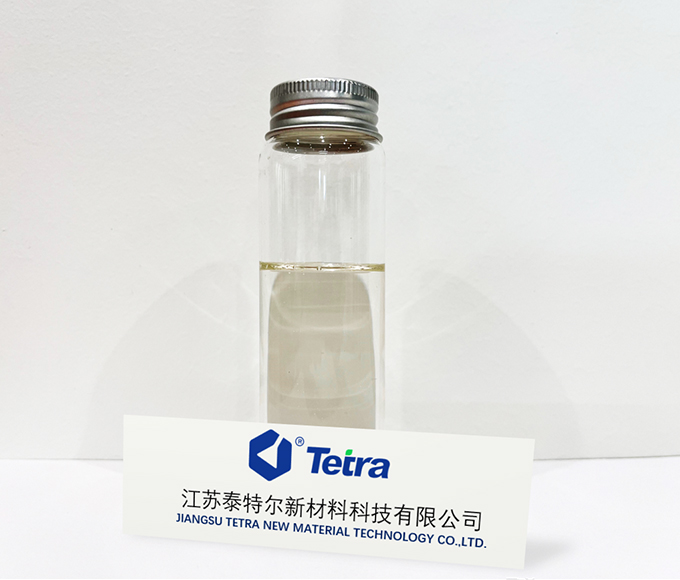
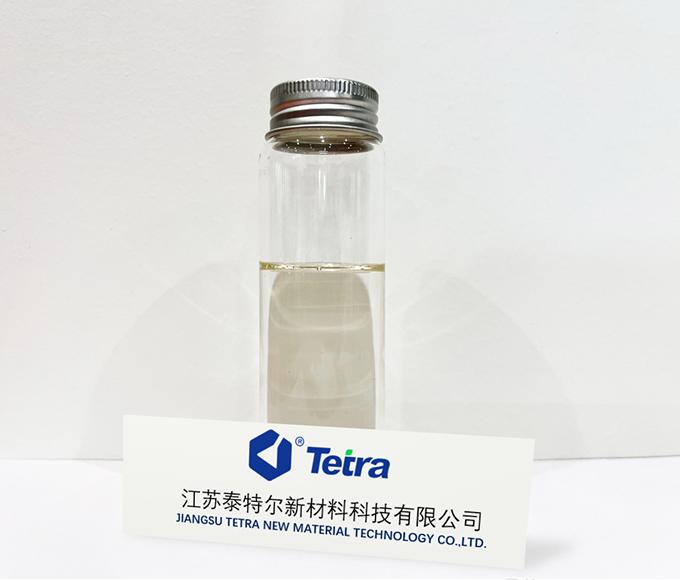
| Appearance | Dark brown viscous liquid | Visual incoming QC check for contamination and phase separation |
| Storage temperature | 20 to 35°C | Determines warehouse and transit temperature requirements |
| Shelf life | 12 months | Determines inventory rotation and lot expiry management |
Target viscosity at the dispense temperature: measure and specify the viscosity at the actual dispense temperature — not just at 25°C — to confirm that the capillary flow rate meets the process requirement for the specific gap geometry. For dispense temperatures above 25°C, the viscosity will be lower than the published room-temperature value.
Gap size and capillary distance: define the minimum gap height and the maximum capillary distance that the resin must fill in the specified process time. These parameters determine the minimum acceptable viscosity at the dispense temperature and the maximum acceptable gel time for the process.
Cured Tg target: define the minimum acceptable Tg for the cured encapsulant — measured by DSC or DMA — and the cure schedule that achieves it. The Tg is formulation-dependent and must be validated experimentally for the specific hardener system and cure profile.
Ionic and halogen control: define the maximum total chlorine content in ppm, the maximum hydrolyzable chlorine content, and the ionic contamination panel — including sodium, potassium, and other metal ions — that the application requires. These limits must be specified in the purchase specification and confirmed on the COA for every incoming lot.
Moisture control and packaging: specify the packaging type — sealed drums with nitrogen blanket if required — the maximum water content, and the storage and transit temperature range. The TDS notes recommended storage at 20 to 35°C and a 12-month shelf life — confirm that the supply chain can maintain these conditions from the point of manufacture to the point of use.
For encapsulation applications where the operating temperature of the device approaches or exceeds the Tg of conventional difunctional epoxy encapsulants — power electronics modules, automotive under-hood electronics, and industrial motor drive controls — the trifunctional architecture of TTA500 provides the higher crosslink density and heat resistance that the application requires. The combination of low cure shrinkage and high Tg potential makes TTA500 a strong candidate base resin for heat-resistant adhesive and encapsulation formulations where the thermal cycling reliability of the assembly is the primary design requirement.
Tetrawill's TDS for TTA500 lists micro-motor parts and embedding pouring as application areas — applications where the encapsulant must flow into the tight clearances between the winding conductors and the motor housing, cure to a void-free mass that provides mechanical support and electrical insulation, and maintain its properties across the thermal cycling of the motor's operating profile. The low viscosity of TTA500 supports the capillary flow into the winding clearances, and the trifunctional crosslink density supports the mechanical and electrical insulation performance of the cured encapsulant.
For underfill-style gap filling applications in electronics packaging — where the encapsulant must flow into the gap between a component and a substrate by capillary action and cure to a void-free mass that redistributes the thermal cycling stress from the solder joints — TTA500 is a candidate base resin for formulation development. The low viscosity supports the capillary flow, and the trifunctional crosslink density supports the modulus and crack resistance that thermal cycling reliability requires.
It is important to treat TTA500 as a base resin candidate for formulation development rather than a ready-to-use underfill product. True semiconductor underfill applications — flip-chip and wafer-level chip-scale packages — typically require tightly controlled ionic content, CTE-matched silica filler design, and very specific rheology that must be validated against the specific packaging specification. The qualification process for these applications requires capillary fill testing on representative gap coupons, void inspection by X-ray or C-SAM, and cured-property validation including Tg, modulus, moisture soak, and thermal cycling.
Step one: define the reliability targets. Identify the thermal cycling profile — temperature range, ramp rate, and number of cycles — the maximum acceptable void percentage in the cured encapsulant, the adhesion requirement at the die-substrate interface, and the insulation resistance and leakage current targets. These targets are the acceptance criteria for the qualification program.
Step two: set the incoming QC gates. Define the acceptance limits for EEW, viscosity at 25°C and at the dispense temperature, appearance, and the ionic contamination panel for every incoming lot. Confirm that the supplier's COA provides measured values — not just pass/fail — for each parameter, and run an incoming QC correlation between the buyer's laboratory and the supplier's COA values for the first three to five lots.
Step three: run process trials. Perform capillary fill tests on representative gap coupons — using the actual gap geometry, surface materials, and dispense temperature of the production process — and inspect the cured encapsulant for voids by X-ray or C-SAM. Confirm that the void content meets the acceptance criterion before proceeding to cured-property validation.
Step four: validate the cured properties. Measure the Tg by DSC or DMA, the modulus by DMA, the cure shrinkage by dilatometry or shadow moiré, and the adhesion strength by die shear or pull testing. Perform moisture soak — typically 85°C and 85% relative humidity for 168 hours — followed by reflow simulation and thermal cycling, and inspect for delamination and cracking at each stage.
Step five: lock the change control and COA format. Define the COA parameters that the supplier must provide with every lot, the retained sample policy, and the change control notification procedure. Confirm that the supplier can provide these documentation capabilities before approving TTA500 for production use.
| Cost Item | Conventional Difunctional Epoxy | TTA500 Trifunctional Epoxy (CAS 5026-74-4) |
|---|---|---|
| Void content from incomplete gap fill | Higher — higher viscosity limits capillary flow into tight clearances | Lower — lower viscosity supports more complete gap filling |
| Thermal cycling failure rate | Higher — lower crosslink density limits crack resistance | Lower — trifunctional crosslink density improves crack resistance |
| Delamination from cure shrinkage | Higher — higher shrinkage increases residual stress at interface | Lower — low shrinkage reduces residual stress and delamination risk |
| RMA rate from encapsulation failures | Higher — void and cracking failures generate field returns | Lower — improved gap fill and thermal cycling reliability reduces return rate |
| Requalification frequency from lot variation | Higher — uncontrolled EEW and viscosity variation | Lower — defined EEW 100 to 115 g/eq and viscosity 1500 to 3000 mPa·s |
| Line hold frequency from incoming QC failures | Higher — no published specification for incoming QC | Lower — published EEW and viscosity specifications anchor incoming QC |
In 2026, the encapsulation material selection decision for advanced microelectronics packaging is a reliability engineering decision with direct consequences for thermal cycling life, void content, moisture resistance, and electrical leakage performance. CAS 5026 74 4 — N,N-Diglycidyl-4-glycidyloxyaniline, supplied by Tetrawill as TTA500 — provides the trifunctional epoxide architecture that addresses the core reliability requirements of advanced encapsulation: low viscosity of 1500 to 3000 mPa·s at 25°C for capillary flow into tight clearances, three epoxide groups per molecule for high crosslink density and heat resistance after cure, low cure shrinkage for residual stress control, and a published EEW of 100 to 115 g/eq that anchors the incoming QC specification for semiconductor packaging materials procurement programs.
Visit the Tetrawill TTA500 product page to review the full specification, then submit the following details to receive a matched recommendation and quotation:
| Parameter | What to Provide |
|---|---|
| Work condition | Device type (module, PCB, power electronics, or packaging), operating temperature range, thermal cycling profile, moisture exposure level |
| Quantity | Sample, pilot, or monthly volume |
| Size and spec | Target gap size in micrometers, capillary distance, dispense temperature, filler requirement (yes or no, target viscosity after filler addition), cure method and maximum cure temperature |
| Target metrics | Maximum void percentage, target Tg and test method, insulation resistance and leakage current targets, adhesion requirement, allowable shrinkage and warpage |
| Current problem | Voiding, poor gap fill, thermal cycling cracking, delamination, leakage current drift, inconsistent viscosity between lots |
1. What is 5026-74-4?
CAS 5026-74-4 is the registry number for N,N-Diglycidyl-4-glycidyloxyaniline, a trifunctional glycidyl amine epoxy resin supplied by Tetrawill as TTA500. It contains three epoxide groups per molecule — two N-glycidyl groups on the amine nitrogen and one O-glycidyl group on the phenol oxygen — which contribute to high crosslink density and heat resistance after cure. Tetrawill publishes an epoxy equivalent weight of 100 to 115 g/eq and a viscosity of 1500 to 3000 mPa·s at 25°C for TTA500, with a recommended storage temperature of 20 to 35°C and a 12-month shelf life.
2. CAS 5026-74-4 vs bisphenol-A epoxy vs cycloaliphatic epoxy — which is better for microelectronics encapsulation?
Bisphenol-A epoxy is the standard platform for general-purpose encapsulation — widely qualified and cost-effective, but limited in Tg and heat resistance compared with trifunctional glycidyl amine systems, and typically higher in viscosity for equivalent molecular weight. Cycloaliphatic epoxy resin is selected for optical and UV-curing applications where UV resistance, non-yellowing performance, and cationic cure compatibility are the primary requirements. CAS 5026-74-4 is selected when high crosslink density, high heat resistance, low cure shrinkage, and low viscosity for capillary gap filling are the primary requirements — the combination that advanced microelectronics encapsulation and underfill-style applications demand.
3. How does a specialty underfill epoxy resin like TTA500 reduce total cost in microelectronics manufacturing?
The ROI comes from three measurable sources. Fewer void-related escapes — lower viscosity produces more complete gap filling, reducing the void content that generates thermal cycling failures and field returns. More stable thermal cycling performance — higher crosslink density and heat resistance reduce the cracking and delamination rate under thermal cycling, reducing the RMA rate and the warranty liability. Better lot consistency — the published EEW and viscosity specifications anchor the incoming QC program, reducing the line hold frequency from out-of-specification incoming material and the requalification events from supplier process drift.
4. Do we need to modify our process to adopt CAS 5026-74-4?
No new equipment is typically required. The process adjustments are dispense temperature optimization — to achieve the target viscosity for the specific gap geometry — degassing procedure confirmation for the TTA500 viscosity range, filler loading optimization if a CTE-matched formulation is required, and cure schedule development to achieve the target Tg. The incoming QC procedure must be updated to include EEW, viscosity at 25°C and at the dispense temperature, and the ionic contamination panel that the application requires. The TDS storage and handling guidance — 20 to 35°C storage, 12-month shelf life — should be incorporated into the inventory management procedure before the first production lot is received.
5. What parameters should I provide for correct TTA500 selection and quoting?
Gap size in micrometers, target viscosity at the dispense temperature, cure temperature and time constraints, minimum acceptable Tg and the test method, thermal cycling profile (temperature range, ramp rate, and number of cycles), moisture exposure level, insulation resistance and leakage current targets, ionic and chlorine contamination limits, filler requirement (yes or no, and target viscosity after filler addition), monthly volume and delivery schedule, and the primary failure mode being addressed — voiding, thermal cycling cracking, delamination, leakage current drift, or inconsistent viscosity between lots.