English
 日本語
日本語 한국어
한국어 français
 Deutsch
 Español
 italiano
 русский
 العربية
 ไทย
ไทย हिंदी
हिंदी
In 2026, the miniaturization of electronics packages has reached a point where the encapsulation material is no longer a secondary formulation consideration — it is a primary reliability engineering decision. Fine-pitch flip-chip assemblies, high I/O density system-in-package designs, and advanced LED modules are operating with gap clearances measured in tens of microns, power densities that drive junction temperatures above 150°C, and thermal cycling profiles that accumulate thousands of cycles across the product's service life. The encapsulation material that fills these gaps must penetrate micro-clearances completely before gelation, cure to a void-free dielectric mass that maintains its insulation integrity across the operating temperature range, and resist the mechanical stress of thermal cycling without cracking or delaminating from the die and substrate surfaces.
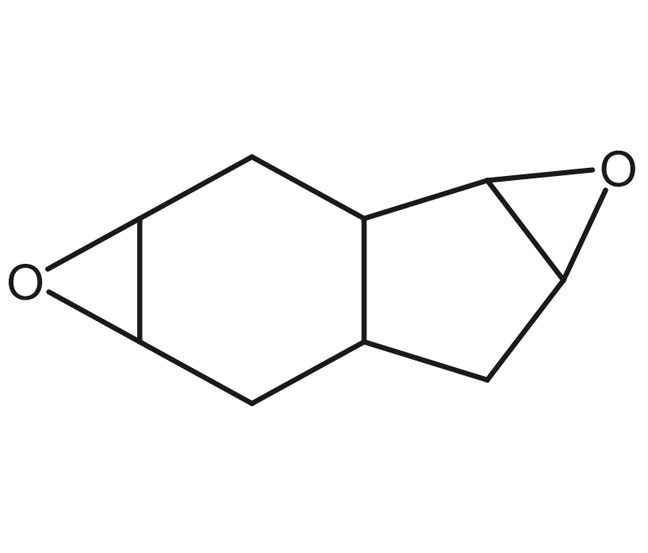
Tetrahydroindene diepoxide — Tetrawill TTA28, CAS 2886-89-7 — is a cycloaliphatic epoxy resin positioned for electrical insulating materials, semiconductor sealants, and LED packaging adhesives, with a published viscosity of 10 to 30 mPa·s at 25°C and an epoxy equivalent weight of 70 to 100 g/eq. These two specifications — the lowest viscosity range in the Tetrawill cycloaliphatic epoxy portfolio and the lowest EEW that reflects the highest epoxide group density per gram of material — define the performance logic of TTA28 as an underfill epoxy monomer and electronics encapsulation resin building block: ultra-low viscosity for capillary penetration into micro-gaps, and high epoxide functionality for the crosslink density that delivers dielectric reliability and thermal stability in the cured network.
The failure modes that drive the selection of a specialty electronics encapsulation resin for advanced packaging applications are interconnected — each one amplifies the others in ways that make the material selection decision more consequential than a single-parameter optimization.
A void in the cured encapsulant is not simply an absence of material — it is a stress concentration point that initiates cracking under thermal cycling, a moisture ingress path that accelerates corrosion of metal contacts and conductor traces, and a dielectric discontinuity that reduces the effective insulation distance between adjacent conductors. In a fine-pitch package where the gap between the die and the substrate is 50 to 100 microns and the conductor pitch is 100 to 200 microns, a void of 20 microns diameter can bridge the insulation distance between adjacent conductors under the electric field conditions of the operating device.
The void content of the cured encapsulant is determined primarily by the viscosity of the resin at the dispense temperature and the surface energy of the die and substrate surfaces. A resin with a viscosity of 10 to 30 mPa·s at 25°C — the published viscosity range of TTA28 — fills micro-gaps by capillary action faster and more completely than a resin with a viscosity of 500 to 1000 mPa·s, reducing the void content and the associated reliability risks.
The thermal cycling stress in an encapsulated electronics package is generated by the coefficient of thermal expansion mismatch between the silicon die, the solder bumps, the encapsulant, and the organic substrate. Each thermal cycle produces a shear stress at the die-substrate interface that accumulates with each cycle until the encapsulant cracks, the solder joint fractures, or the encapsulant delaminates from the die or substrate surface. The resistance of the cured encapsulant to this accumulated stress depends on its modulus, its fracture toughness, and its dimensional stability — the ability to maintain its geometry without creep or stress relaxation at the operating temperature.
Tetrawill states that the saturated bicyclic cycloaliphatic structure of TTA28 — without an ester bond and with a small molecular weight — yields cured systems with high crosslink density, strong rigidity, high heat resistance, and good electrical insulation. The high crosslink density is the structural basis for the dimensional stability and thermal cycling resistance that advanced electronics packaging requires.
In 2026, electronics manufacturers operating in aerospace, automotive, and medical device supply chains are subject to material traceability requirements that extend to the individual lot of every chemical input in the encapsulation formulation. A supplier who cannot provide a complete COA with measured values for EEW, viscosity, color, and moisture content for every production lot — and who cannot provide written change-control notification before any change to the manufacturing process or raw material source — is not a viable partner for these programs.
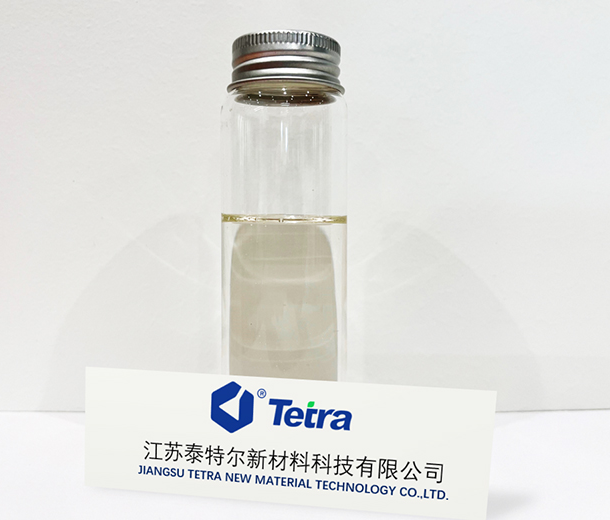
The performance logic of TTA28 in electronics encapsulation and underfill-style applications derives from three structural and chemical features of the tetrahydroindene diepoxide molecule: the ultra-low viscosity that enables capillary penetration, the high epoxide group density that enables high crosslink density after cure, and the saturated cycloaliphatic backbone that provides the dielectric properties and UV resistance that electronics applications require.
The viscosity of TTA28 at 25°C — 10 to 30 mPa·s — is among the lowest published values for any epoxy resin in the Tetrawill portfolio. Tetrawill's product page describes TTA28 as having very low viscosity, convenient to operate, excellent dilution effect, and good miscibility with other resins, positioning it as an epoxy active diluent. At this viscosity, TTA28 flows into micro-gaps by capillary action at room temperature, wetting the die and substrate surfaces and displacing the air in the gap before gelation begins.
The dilution property data on Tetrawill's product page shows that TTA28 produces a more significant viscosity reduction in NPEL128 (a standard bisphenol-A epoxy) than TTA21 at equivalent addition levels — demonstrating that TTA28 is a more effective viscosity reducer than the standard cycloaliphatic epoxy reference, which is relevant for formulations where the base resin viscosity must be reduced to achieve the target capillary flow rate without heating the assembly above the temperature that the components can tolerate.
The epoxy equivalent weight of TTA28 — 70 to 100 g/eq — is the lowest in the Tetrawill cycloaliphatic epoxy portfolio, reflecting the highest epoxide group density per gram of material. In a cured epoxy network, the crosslink density is proportional to the epoxide group density of the resin — a lower EEW produces more crosslinks per unit volume of cured material, which produces a higher Tg, a higher modulus, and a higher resistance to crack propagation under thermal cycling stress.
Tetrawill's anhydride curing property data for TTA28 demonstrates a key advantage of the low EEW: when a small amount of TTA28 is added to other resins, it can maintain high Tg while reducing system viscosity without affecting the mechanical properties. This is the opposite of the behavior of conventional reactive diluents — which reduce viscosity but also reduce Tg and mechanical properties by diluting the crosslink density of the cured network. TTA28 reduces viscosity while maintaining or improving the Tg of the cured system because its high epoxide group density compensates for the dilution effect on crosslink density.
The saturated bicyclic structure of tetrahydroindene diepoxide — without the benzene ring of aromatic epoxy systems and without the ester bond of some cycloaliphatic epoxies — provides the dielectric properties and UV resistance that electronics encapsulation applications require. The absence of the benzene ring eliminates the UV-absorbing aromatic structures that initiate photo-oxidation and yellowing in aromatic epoxy systems. The absence of the ester bond eliminates the hydrolysis pathway that reduces the moisture resistance and electrical insulation performance of ester-containing cycloaliphatic epoxies in humid environments.
Tetrawill describes the cured TTA28 system as having high weather resistance, UV resistance, low water absorption, and good electrical insulation — the property set that semiconductor sealant and LED packaging adhesive applications require for long-term reliability in humid and UV-exposed environments.
Tetrawill's product page documents four cure modes for TTA28: dilution property (as active diluent), anhydride curing, thermal cationic curing, and UV cationic curing. The UV cationic curing properties are described as high UV cationic reaction activity, low curing shrinkage, low viscosity, and high transparency — suitable for UV curing packaging substrates, optical transparent insulating films, ink and packaging applications, and coating and bonding applications. The UV cationic cure option is particularly relevant for 2026 production efficiency targets: UV cationic cure eliminates the thermal cure oven step, reducing cure cycle time, cure energy consumption, and the thermal load on the assembly during cure.
| Parameter | Specification | Relevance to Electronics Encapsulation |
|---|---|---|
| Grade | TTA28 | Tetrawill product code for tetrahydroindene diepoxide |
| CAS number | 2886-89-7 | Identity confirmation for regulatory and SDS compliance |
| Content (assay) | 95.0% minimum | Determines epoxide group density per gram of material |
| Epoxy equivalent weight (EEW) | 70 to 100 g/eq | Determines crosslink density potential and stoichiometric mix ratio |
| Viscosity at 25°C | 10 to 30 mPa·s | Determines capillary flow rate in micro-gap filling applications |
| Chroma (APHA) | 50 maximum | Determines color contribution — relevant for optical and LED applications |
| Storage temperature | 20 to 35°C | Determines warehouse and transit temperature requirements |
| Shelf life | 12 months | Determines inventory rotation and lot expiry management |
Role in the formulation system: TTA28 can function as the primary monomer in a low-viscosity UV cationic or thermal cationic cure system, as an active diluent in a higher-viscosity base resin system where viscosity reduction is required without Tg sacrifice, or as a blend partner in a multi-component formulation where the EEW of TTA28 contributes to the overall crosslink density of the cured network. Define the primary role before specifying the addition level — the optimal loading differs significantly between these three roles.
Cure route selection: UV cationic cure provides the fastest throughput and lowest thermal load on the assembly during cure, and is appropriate for applications where UV access to the full encapsulant volume is achievable. Thermal cationic cure provides complete cure through the full encapsulant depth for applications where UV penetration is limited. Anhydride cure provides the highest Tg potential for applications where maximum thermal stability is the primary requirement.
Electronics-grade quality controls: define the maximum total chlorine content, the maximum hydrolyzable chlorine content, and the ionic contamination panel — including sodium, potassium, and other metal ions — that the application requires. These limits must be specified in the purchase specification and confirmed on the COA for every incoming lot. The extremely low halogen content of TTA28 — a structural consequence of the cycloaliphatic synthesis route that does not use epichlorohydrin — is a key advantage for electronics-grade applications where ionic contamination is a reliability-critical parameter.
For underfill-style applications where the encapsulant must flow into the gap between a flip-chip die and the substrate by capillary action — filling the space around the solder bumps and wetting the die and substrate surfaces before gelation — TTA28's viscosity of 10 to 30 mPa·s at 25°C provides the capillary flow rate that fine-pitch packages require. The high epoxide group density of TTA28 — EEW 70 to 100 g/eq — provides the crosslink density that thermal cycling reliability requires in the cured underfill mass.
For formulated underfill systems where silica filler is added to reduce the CTE of the cured encapsulant, TTA28 functions as the low-viscosity base resin that accommodates the filler loading without exceeding the maximum dispense viscosity for the specific gap geometry. The dilution property data confirms that TTA28 provides a more effective viscosity reduction than TTA21 at equivalent addition levels, which is relevant for high-filler-loading formulations where the base resin viscosity must be minimized to achieve the target dispense viscosity.
For edge-seal adhesive applications where the encapsulant must penetrate narrow perimeter channels and cure to a continuous seal that prevents moisture ingress and maintains the electrical isolation of the package interior, TTA28's ultra-low viscosity supports the penetration into narrow channels and the wetting of the substrate surfaces that seal continuity requires. Tetrawill describes the cured TTA28 system as having low water absorption and good electrical insulation — the properties that determine the long-term moisture resistance and insulation stability of the edge seal in humid environments.
Tetrawill's TDS explicitly lists semiconductor sealants and LED packaging adhesives as application areas for TTA28. For semiconductor sealant applications — where the sealant must maintain its dielectric integrity and dimensional stability across the thermal cycling of the device's operating profile — the high crosslink density, high heat resistance, and low water absorption of the cured TTA28 system provide the reliability profile that semiconductor packaging requires. For LED packaging adhesive applications — where the adhesive must maintain its optical clarity and adhesion strength across the UV and thermal exposure of the LED's operating environment — the 50 APHA maximum color, UV resistance, and high weather resistance of TTA28 provide the optical stability and durability that LED packaging requires.
Tetrawill's TDS lists electrical insulation varnishes and insulators as application areas for TTA28. For electrical insulation varnish applications — where the varnish must penetrate the winding conductors of a motor or transformer coil and cure to a void-free insulation mass — TTA28's ultra-low viscosity supports the penetration into the winding clearances, and the high crosslink density and good electrical insulation of the cured system provide the dielectric performance that high-voltage insulation applications require.
Step one: define the gap geometry and flow requirements. Identify the minimum gap height in microns, the maximum capillary flow length, the dispense temperature window, and the maximum acceptable void percentage in the cured encapsulant. These parameters determine the minimum acceptable viscosity at the dispense temperature and the maximum acceptable gel time for the process.
Step two: choose the formulation strategy. Define whether TTA28 will function as the primary monomer, the active diluent, or the blend partner in the formulation system. Align the EEW of TTA28 with the stoichiometric requirements of the cure system — for anhydride cure, calculate the anhydride equivalent required for the TTA28 EEW of 70 to 100 g/eq; for cationic cure, confirm the photoinitiator or thermal initiator loading that achieves the target cure speed and Tg.
Step three: select the cure approach based on throughput and energy targets. UV cationic cure eliminates the thermal cure oven step and reduces cure cycle time and energy consumption — evaluate UV access to the full encapsulant volume for the specific package geometry before committing to UV cationic cure. Thermal cationic cure provides complete cure through the full encapsulant depth for geometries where UV penetration is limited.
Step four: validate the reliability performance. Perform capillary fill tests on representative gap coupons and inspect the cured encapsulant for voids by X-ray or C-SAM. Measure the Tg by DSC or DMA, the modulus by DMA, and the adhesion strength by die shear or pull testing. Perform moisture soak — typically 85°C and 85% relative humidity for 168 hours — followed by thermal cycling from the minimum to maximum operating temperature for the required number of cycles, and inspect for delamination and cracking at each stage.
Step five: lock the incoming QC and audit documentation. Define the acceptance criteria for EEW, viscosity, color, and ionic contamination for every incoming lot. Confirm that the supplier provides a complete COA with measured values — not just pass/fail — for each parameter, and that the change-control notification procedure is in place before approving TTA28 for production use.
| Cost Item | High-Viscosity Conventional Epoxy | TTA28 Ultra-Low-Viscosity Cycloaliphatic Epoxy |
|---|---|---|
| Void content from incomplete gap fill | Higher — high viscosity limits capillary penetration into micro-gaps | Lower — 10 to 30 mPa·s viscosity supports complete capillary fill |
| Tg reduction from viscosity dilution | Higher — conventional reactive diluents reduce Tg | Lower — TTA28 maintains high Tg while reducing viscosity |
| Thermal cycling failure rate | Higher — lower crosslink density limits crack resistance | Lower — high EEW density supports high crosslink density and crack resistance |
| Moisture ingress from incomplete sealing | Higher — voids and incomplete wetting create moisture paths | Lower — complete gap fill eliminates capillary moisture ingress paths |
| Cure energy and cycle time | Higher — thermal cure oven required | Lower — UV cationic cure option eliminates oven step |
| Lot-to-lot viscosity drift | Higher — uncontrolled viscosity variation | Lower — published 10 to 30 mPa·s specification anchors incoming QC |
In 2026, the electronics encapsulation material selection decision for advanced packaging applications is a reliability engineering decision with direct consequences for void content, thermal cycling life, dielectric integrity, and moisture resistance. Tetrahydroindene diepoxide TTA28 (CAS 2886-89-7) provides the material architecture that addresses the core reliability requirements of underfill-style gap filling and edge-seal applications: ultra-low viscosity of 10 to 30 mPa·s at 25°C for capillary penetration into micro-gaps, EEW of 70 to 100 g/eq for high crosslink density and thermal stability after cure, saturated cycloaliphatic backbone for dielectric reliability and UV resistance, and cure system flexibility — UV cationic, thermal cationic, and anhydride — for production efficiency optimization.
Tetrawill's TTA28 — 95.0% minimum content, 70 to 100 g/eq EEW, 10 to 30 mPa·s viscosity at 25°C, 50 APHA maximum color, extremely low halogen content, 20 to 35°C storage temperature, and 12-month shelf life — provides the specification clarity and electronics-grade purity that semiconductor sealant, LED packaging adhesive, and electrical insulation material programs require. Visit the Tetrawill TTA28 product page to review the full specification, download the Technical Data Sheet and Safety Data Sheet, and submit your application requirements for a matched formulation recommendation and quotation.
Visit the Tetrawill TTA28 product page to review the full specification, then submit the following details to receive a matched recommendation and quotation:
| Parameter | What to Provide |
|---|---|
| Work condition | Device and package type, operating temperature range, thermal cycling profile, moisture and chemical exposure, compliance and audit requirements |
| Quantity | Sample, pilot, or monthly volume |
| Size and spec | Minimum gap in microns, capillary flow length, target viscosity at dispense temperature, filler usage (yes or no), cure method (UV cationic, thermal cationic, or anhydride) |
| Target metrics | Maximum void percentage, target Tg and heat resistance, dielectric withstand and insulation resistance targets, adhesion retention after thermal cycling |
| Current problem | Voiding, poor capillary fill, cracking or delamination after thermal cycling, leakage current drift, long cure time or high energy consumption, lot-to-lot viscosity drift |
1. What is tetrahydroindene diepoxide (CAS 2886-89-7)?
CAS 2886-89-7 is the registry number for tetrahydroindene diepoxide, supplied by Tetrawill as TTA28. It is a cycloaliphatic epoxy resin characterized by a saturated bicyclic structure without an ester bond and with a small molecular weight, producing cured systems with high crosslink density, strong rigidity, high heat resistance, high weather resistance, UV resistance, low water absorption, and good electrical insulation. Tetrawill lists electrical insulating materials, semiconductor sealants, and LED packaging adhesives as primary application areas. Published specifications include 95.0% minimum content, 70 to 100 g/eq EEW, 10 to 30 mPa·s viscosity at 25°C, and 50 APHA maximum color.
2. How does TTA28 compare with conventional bisphenol-A epoxies or standard reactive diluents?
Bisphenol-A epoxies are widely qualified and cost-effective for general encapsulation but have higher viscosity — typically 10,000 to 15,000 mPa·s at 25°C — that limits capillary penetration into micro-gaps, and contain aromatic benzene rings that absorb UV radiation and can yellow under UV and thermal exposure. Standard reactive diluents reduce viscosity but typically reduce Tg and mechanical properties by diluting the crosslink density of the cured network. TTA28 reduces viscosity to 10 to 30 mPa·s while maintaining high Tg — because its EEW of 70 to 100 g/eq provides a higher epoxide group density per gram than most reactive diluents, compensating for the dilution effect on crosslink density. The saturated cycloaliphatic backbone provides UV resistance and low water absorption that aromatic systems cannot match.
3. How does a specialty underfill epoxy monomer like TTA28 reduce total cost in electronics manufacturing?
The ROI comes from three measurable sources. Higher yield from lower void content — complete capillary fill reduces the void-related reject rate that generates scrap and rework cost. Lower field failure rate from improved thermal cycling reliability — high crosslink density and dimensional stability reduce the cracking and delamination failures that generate warranty returns and liability exposure. Faster cure cycle time and lower cure energy when UV cationic cure is used — eliminating the thermal cure oven step reduces the energy cost and the cycle time per unit, improving throughput and reducing the carbon footprint of the production process.
4. Do we need to modify our process line to adopt CAS 2886-89-7?
No major equipment modification is typically required. The process adjustments are dispense temperature optimization — TTA28's viscosity of 10 to 30 mPa·s at 25°C may allow room-temperature dispensing where higher-viscosity resins required heating — cure system selection (UV cationic cure requires a UV exposure system if not already installed), filler loading optimization if a CTE-matched formulation is required, and incoming QC procedure update to include EEW, viscosity, color, and ionic contamination checks. The storage and handling requirements — 20 to 35°C storage, 12-month shelf life — should be incorporated into the inventory management procedure before the first production lot is received.
5. What parameters should I provide for correct TTA28 selection and quoting?
<p style="margin-top: 0px; margin-right: 1em; margin-left: 1em; padding: 0px; color: rgb(31, 35, 40); font-family: -apple-system, BlinkMacSystemFont, "Segoe UI", "Noto Sans", Helvetica, Arial, sans-serif, "Apple Color Emoji", "Segoe UI Emoji"; white-space: normal


![TTA3150: Poly[(2-oxiranyl)-1,2-cyclohexanediol] -2-ethyl-2-(hydroxymethyl)-1,3-propanediol Ether](/uploads/image/20221122/19/1-2-cyclohexane-diol.jpg "TTA3150: Poly[(2-oxiranyl)-1,2-cyclohexanediol] -2-ethyl-2-(hydroxymethyl)-1,3-propanediol Ether")