English
 日本語
日本語 한국어
한국어 français
 Deutsch
 Español
 italiano
 русский
 العربية
 ไทย
ไทย हिंदी
हिंदी
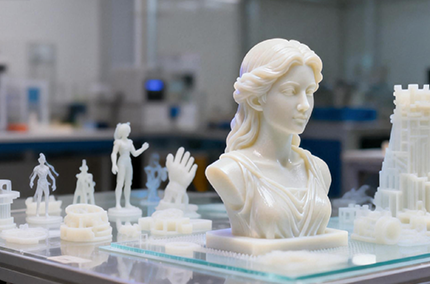
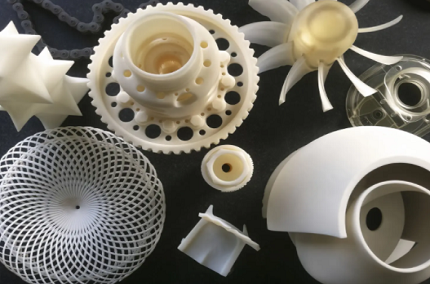
With the rapid development of 3D printing technology in industrial manufacturing, electronics, medical devices, and functional structural components, the performance requirements for printing materials are continuously increasing. Compared to conventional thermoplastic materials, photopolymer resins are preferred in high-end 3D printing due to their high dimensional accuracy and excellent surface finish.
Within photopolymer systems, cycloaliphatic epoxy resins are gradually demonstrating strong potential thanks to their unique structure and performance characteristics.
In SLA, DLP, and other photopolymer 3D printing processes, material performance directly affects print accuracy, dimensional stability, and final part properties. Ideal photopolymer resins typically require:
Good photoreactivity and controllable curing rate
Low curing shrinkage to minimize deformation
Dimensional stability and mechanical integrity of printed parts
Long-term stability of the printed component under service conditions
Cycloaliphatic epoxy resins align closely with these critical performance criteria.
Cycloaliphatic epoxy resins are commonly used in UV cationic curing systems, offering several advantages over free-radical systems in 3D printing applications.
2.1 Low Curing Shrinkage and Dimensional Stability
Compared to some acrylate systems, cycloaliphatic epoxy resins exhibit lower volumetric shrinkage during curing, which helps to:
Reduce warping and internal stresses in printed parts
Improve dimensional accuracy of complex and fine-feature components
2.2 High Printing Accuracy and Surface Quality
The dense crosslinked network formed after curing enables:
Smooth surface finish
Clear detail reproduction
Reduced visible layer lines
These properties are particularly suitable for applications requiring high precision and aesthetic quality.
2.3 Low Yellowing and Appearance Stability
Cycloaliphatic epoxy resins are free of aromatic structures and therefore resist yellowing under light exposure, maintaining consistent appearance and color stability—especially important for transparent or light-colored 3D printed components.
The final performance of 3D printed parts depends not only on the printing process but also on the cured material’s mechanical properties and its compatibility with post-processing.
Cycloaliphatic epoxy resins typically provide:
High crosslink density
Good rigidity and structural stability
Tunable performance through formulation adjustments
By combining with modifiers or flexible components, the performance can be tailored for applications ranging from rigid structural parts to functional components.
A unique advantage of cycloaliphatic epoxy resins in UV cationic curing systems is their post-curing capability, meaning the reaction can continue even after the light source is removed. In 3D printing, this enables:
More complete curing of internal or shadowed regions
Improved structural uniformity and reliability
Better dimensional consistency for complex geometries
This makes cycloaliphatic epoxy resins particularly suitable for high-precision and intricate printed structures.
While cycloaliphatic epoxy resins show significant potential in 3D printing, practical application still requires attention to:
Balancing curing speed and printing efficiency
Controlling viscosity and flow properties in the formulation
Coordinating with photoinitiators and other functional additives
With ongoing optimization in formulations and printing processes, the application space for cycloaliphatic epoxy resins in 3D printing continues to expand.
As 3D printing increasingly moves from prototyping to functional and end-use components, the performance requirements for materials are approaching those of conventional engineering materials. Choosing the right aliphatic epoxy supplier is essential to meet these advanced performance standards, ensuring high-quality, durable materials for 3D printing applications.
Thanks to their low shrinkage, low yellowing, and high structural stability, cycloaliphatic epoxy resins are expected to play an increasingly important role in high-precision, functional, and high-reliability 3D printing materials.