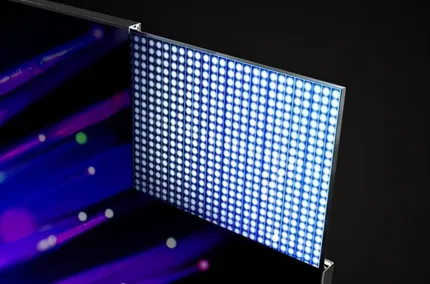
With LED technology continuously advancing toward higher power density, improved luminous efficiency, and device miniaturization, encapsulation materials have become a critical factor in determining device lifetime and long-term stability.
Although conventional bisphenol-A epoxy systems are widely used in general-purpose LED encapsulation, their limitations become increasingly evident under harsh conditions such as high temperature, high humidity, and prolonged light exposure.
Against this backdrop, cycloaliphatic epoxy resins are emerging as a key material direction for high-end LED encapsulation systems due to their distinctive molecular structure and balanced performance profile. For manufacturers seeking enhanced optical clarity, UV resistance, and long-term reliability, partnering with a professional aliphatic epoxy supplier can further ensure consistent material quality and tailored formulation support for advanced LED applications.
Core Challenges Faced by LED Encapsulation Materials
Encapsulation materials serve not only as mechanical protection but also directly influence optical performance and long-term reliability. Key challenges include:
1.1 Optical Stability
Yellowing under prolonged light exposure reduces light transmittance and affects luminous efficiency as well as color stability.
1.2 Resistance to Damp Heat Aging
Under harsh testing conditions, materials must maintain structural integrity without cracking, delamination, or performance degradation.
1.3 Electrical Insulation and Ionic Impurity Control
Residual chlorine ions and other ionic impurities may negatively impact long-term electrical reliability.
1.4 Low Internal Stress and Dimensional Stability
Curing shrinkage can generate internal stresses, potentially affecting chip integrity and wire bonding reliability.
Achieving a balanced performance across optical, mechanical, and electrical properties remains a central challenge for encapsulation materials.
Structural Advantages of Cycloaliphatic Epoxy Resins
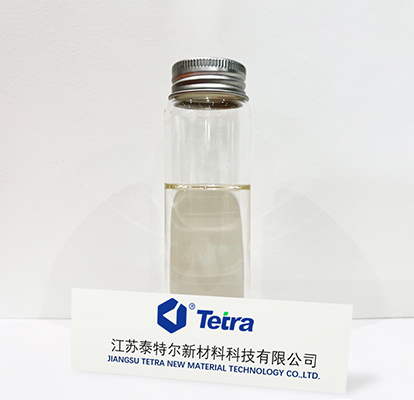
The primary distinction between cycloaliphatic epoxy resins and traditional bisphenol-A epoxies lies in their molecular structure, particularly in systems formulated with cycloaliphatic amine epoxy curing technologies, which further enhance performance characteristics while maintaining the inherent advantages of cycloaliphatic chemistry.
Absence of aromatic rings
Saturated molecular backbone
Capability to form highly crosslinked networks
These structural features translate into several performance advantages.
2.1 Low Yellowing Behavior
Aromatic structures are prone to photo-oxidative degradation under UV and high-energy light exposure, resulting in discoloration.
In contrast, cycloaliphatic structures exhibit higher resistance to photodegradation due to their saturated backbone, helping maintain long-term transparency and stable optical performance.
This characteristic is particularly important in high-power LED and outdoor lighting applications.
2.2 Excellent Resistance to Damp Heat Aging
Cycloaliphatic epoxy resins typically form dense crosslinked networks with relatively low water absorption.
Under damp heat aging conditions testing, they demonstrate slower performance degradation, contributing to extended encapsulation lifetime.
As Mini LED and Micro LED technologies evolve toward higher integration density, long-term material reliability becomes increasingly critical.
2.3 Low Ionic Impurities and Superior Electrical Insulation
Cycloaliphatic epoxy resins are often characterized by low hydrolyzable chlorine content and reduced ionic impurity levels, enhancing electrical insulation properties and long-term stability.
This advantage is particularly significant in high-voltage or high-power LED applications.
2.4 Low Shrinkage and Reduced Internal Stress
Compared to certain conventional epoxy systems, cycloaliphatic epoxies generally exhibit lower volumetric shrinkage during curing, which helps:
Minimize interfacial stress
Reduce delamination risks
Protect bonding wires
Improve structural integrity
These characteristics are especially valuable in large-format or high-power encapsulation designs.
Future Development Trends
As LED technologies continue to evolve toward higher power, higher density, and greater reliability, encapsulation materials must meet increasingly stringent requirements:
With ongoing improvements in molecular design and purification technologies, cycloaliphatic epoxy resins are expected to play an increasingly important role in next-generation optoelectronic encapsulation systems, especially as the demand for high-performance specialty resin and chemical solutions continues to grow across advanced electronics and photonic applications.
Conclusion
In the continuous evolution of LED encapsulation materials, cycloaliphatic epoxy resins stand out due to their structural advantages and well-balanced performance characteristics.
For companies focused on advanced optoelectronic materials, a deep understanding of the technical attributes and application boundaries of cycloaliphatic epoxy resins will be essential to gaining a competitive advantage in next-generation encapsulation solutions.
 English
 日本語
日本語 한국어
한국어 français
 Deutsch
 Español
 italiano
 русский
 العربية
 ไทย
ไทย हिंदी
हिंदी