English
 日本語
日本語 한국어
한국어 français
 Deutsch
 Español
 italiano
 русский
 العربية
 ไทย
ไทย हिंदी
हिंदी
In 2026, procurement teams managing strategic programs in composites, electrical insulation, and electronics packaging are operating under a level of supplier scrutiny that did not exist five years ago. Batch-to-batch consistency requirements have tightened because downstream customers — aerospace integrators, rail system OEMs, power electronics manufacturers, and medical device assemblers — have learned that resin variability is not a materials science problem. It is a supply chain risk that cascades into process drift, scrap, field failures, warranty liability, and costly requalification events that consume engineering resources and damage customer relationships. The question that strategic sourcing teams are asking in 2026 is not "what is the price per kilogram?" It is "can this bulk epoxy resin supplier demonstrate the lot consistency, documentation discipline, and technical support capability that our program requires?"
Glycidyl amine epoxy resin — an epoxy system with glycidyl amine in the molecular chain, used across UV-curing coatings and inks, adhesives, 3D printing resins, insulating castables, and electronic packaging materials — is a performance-critical input in many of these strategic programs. The parameters that determine whether a glycidyl amine resin manufacturer can support a strategic program are not primarily commercial: they are technical. Epoxy equivalent weight stability, viscosity consistency, chlorine and halogen control, color and water content limits, and the documentation infrastructure that supports COA discipline and change control are the quality standards that separate a strategic supplier from a commodity source. Tetrawill's glycidyl amine epoxy resin portfolio — covering grades TTA182, TTA184, TTA186, TTA500, and TTA520 for applications from potting and insulation to composites and high-temperature adhesives — is positioned to meet these high purity epoxy sourcing requirements with the technical service infrastructure that strategic programs demand.
The financial case for treating glycidyl amine epoxy resin as a controlled performance input rather than a commodity is built on the cost of variability — a cost that is rarely visible in the purchase price but is consistently visible in the total cost of ownership of the program that uses the resin.
A shift of 10 g/eq in the epoxy equivalent weight of a glycidyl amine epoxy resin changes the stoichiometric mix ratio of the resin-hardener system. If the mix ratio is not adjusted to compensate — which it typically is not in a production environment where the mix ratio is locked in the process specification — the cured network will be either resin-rich or hardener-rich, producing a Tg that is lower than the design target, a mechanical strength that is below the specification, and a dielectric performance that may not meet the electrical insulation requirement of the application. The consequence is not a single failed part — it is a production lot that must be scrapped or reworked, a process investigation that consumes engineering time, and a potential field failure if the out-of-specification material reached the customer.
A viscosity shift of 20% in the incoming resin changes the impregnation behavior of the resin in a composite layup, the bubble release rate in a potting application, and the fiber wet-out quality in a filament winding process. Each of these process changes produces a different void content in the cured part — and void content is the primary determinant of the dielectric strength, the interlaminar shear strength, and the moisture resistance of the finished component.
Global customers in aerospace, rail, and electrical insulation supply chains are increasingly requiring COA discipline — a complete certificate of analysis for every lot, with defined acceptance limits for every critical parameter — as a condition of supplier approval. They are also requiring change-control notice: a formal notification before any change to the manufacturing process, raw material source, or product specification that could affect the performance of the resin. A supplier who cannot provide these documentation capabilities is not a viable strategic partner for these programs, regardless of the price per kilogram.
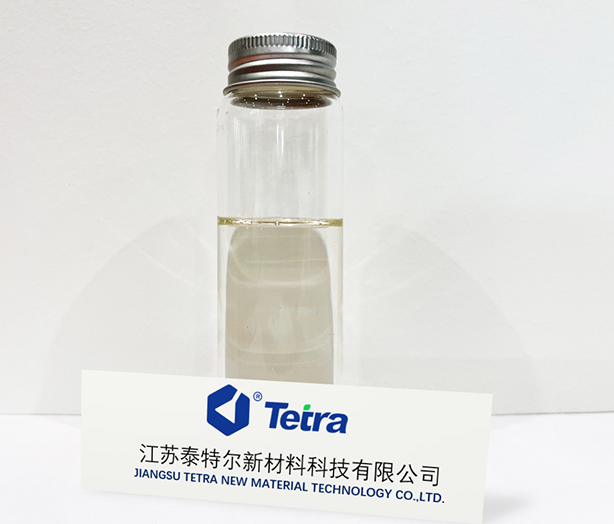
Understanding the chemistry of glycidyl amine epoxy resin at the level that is relevant to procurement and quality decisions — not at the level of academic organic chemistry — is the foundation for specifying the right quality parameters and interpreting the COA data that the supplier provides.
Tetrawill describes glycidyl amine epoxy resins as epoxy resins with glycidyl amine in the molecular chain. The manufacturing route — reaction of an aromatic amine with epichlorohydrin followed by dehydrochlorination — is the context for understanding why chlorine and halogen control are critical quality parameters for this resin family. The epichlorohydrin used in the synthesis introduces chlorine into the reaction system, and incomplete dehydrochlorination leaves residual hydrolyzable chlorine in the product. This residual chlorine is the source of the ionic contamination risk that makes chlorine control a non-negotiable specification parameter for electrical insulation and electronics packaging applications.
The multi-functional epoxide structure of glycidyl amine epoxy resins — which can carry two, three, or four epoxide groups per molecule depending on the specific grade — produces a higher crosslink density in the cured network than difunctional bisphenol-A epoxy systems. Higher crosslink density translates directly into higher Tg, higher heat resistance, and higher mechanical strength in the cured composite or casting — the performance properties that justify the use of glycidyl amine epoxy resin in demanding structural and electrical insulation applications.
The low migration and controlled shrinkage behavior that Tetrawill highlights for its glycidyl amine epoxy resin products are relevant for electronics packaging applications where dimensional stability and the absence of extractable species are reliability requirements. These properties are formulation-dependent — they depend on the specific grade, the hardener system, and the cure schedule — but they are enabled by the molecular architecture of the glycidyl amine backbone.
The industrial chemical quality control specification for a bulk glycidyl amine epoxy resin procurement program must cover five parameter categories: epoxy equivalent weight, viscosity, chlorine and halogen content, color and water content, and documentation and change control. Each category has a direct consequence for the performance of the downstream application and the reliability of the production process.
The epoxy equivalent weight — expressed in grams per equivalent — is the primary chemical specification for an epoxy resin. It determines the stoichiometric mix ratio with the hardener system and the crosslink density of the cured network. For a strategic program, the EEW specification must define not just the target value but the acceptable lot-to-lot variation window — the range within which the mix ratio does not need to be adjusted and the cured network properties remain within the design specification.
Tetrawill publishes EEW specifications for its resin products — for example, TTA184 lists an epoxy equivalent of 160 to 180 g/eq. For a strategic procurement program, this published range is the starting point for the specification negotiation. The procurement team should request the supplier's statistical process control data — Cp and Cpk values for the EEW parameter — to confirm that the manufacturing process is capable of holding the EEW within the specified window across production lots.
Viscosity at the processing temperature is the primary processability specification for a bulk epoxy resin. It determines the impregnation behavior in composite applications, the bubble release rate in potting applications, and the flow behavior in casting applications. Tetrawill publishes viscosity specifications for its resin products — TTA184 lists a viscosity of 600 to 900 mPa·s at 25°C. For a strategic program, the viscosity specification must define the acceptable lot-to-lot variation window and the test method — temperature, shear rate, and instrument type — to ensure that the supplier's COA viscosity data is directly comparable to the incoming QC measurement in the buyer's laboratory.
Chlorine and halogen control is the most critical quality parameter for electrical insulation and electronics packaging applications of glycidyl amine epoxy resin. Residual hydrolyzable chlorine from the epichlorohydrin synthesis route is the primary ionic contamination risk — it can form chloride ions in the presence of moisture, creating conductive pathways that increase leakage current and accelerate corrosion of metal contacts and conductor traces.
Tetrawill positions some products with low chlorine characteristics — TTA184 is described as low chlorine — and positions its resin families with low halogen content as a broader product direction. For a strategic procurement program, the chlorine specification must define the total chlorine limit in ppm, the hydrolyzable chlorine limit separately if required by the application, and the ionic contamination panel — including sodium, potassium, and other metal ions — if the application requires a full ionic purity specification.
| Parameter | Specification Requirement | Why It Matters |
|---|---|---|
| Color (APHA) | Maximum APHA value per lot — Tetrawill publishes 100 APHA max for TTA184 | Initial color affects optical performance in transparent applications and is a proxy for oxidation and contamination |
| Water content | Maximum percentage per lot | Water inhibits cationic cure, reduces pot life in amine-cured systems, and increases void content in castings |
| Packaging | Moisture-barrier packaging, nitrogen blanket if required | Protects water content and color stability during storage and transit |
| Storage temperature | Defined range with shelf life | Determines inventory management requirements and acceptable transit conditions |
The documentation infrastructure is the non-negotiable quality standard for a 2026 strategic procurement program. The minimum documentation package for each lot should include a certificate of analysis with measured values — not just "pass/fail" — for EEW, viscosity, color, water content, and chlorine or halogen content. The supplier should maintain retained samples for each production lot for a defined period — typically two years — to support failure investigation if a field issue is traced to a specific lot.
Change control notification — a formal written notice before any change to the manufacturing process, raw material source, or product specification — is the documentation requirement that protects the buyer's qualification investment. A supplier who changes the epichlorohydrin source, the reaction conditions, or the purification process without notifying the buyer can invalidate the buyer's qualification data without the buyer's knowledge, creating a field failure risk that is not detectable until the problem manifests in the production process or the field.
For electrical potting and insulation casting applications — including dry-type transformer insulation, motor coil impregnation, and power electronics encapsulation — the critical quality parameters are EEW stability (for consistent mix ratio and Tg), low chlorine and halogen content (for ionic contamination control), and consistent viscosity (for void-free filling of complex geometries). The TTA184 grade — with its 160 to 180 g/eq EEW, 600 to 900 mPa·s viscosity, 100 APHA maximum color, and low chlorine positioning — is the reference specification for this application category.
For composite applications — including filament winding, resin transfer molding, and prepreg systems — the critical quality parameters are viscosity consistency (for fiber wet-out and impregnation uniformity), reactivity window (for pot life and processing time control), and Tg target (for the structural performance of the cured laminate). The TTA182 and TTA186 grades cover the viscosity and functionality range for composite applications, with the specific grade selection depending on the fiber type, the processing temperature, and the Tg requirement of the structural design.
For adhesive and solvent-free coating applications — including structural adhesives for electronics assembly and UV-curing coatings for optical and protective applications — the critical quality parameters are viscosity control (for application consistency and film thickness uniformity) and cure-response consistency (for bond strength and coating hardness reproducibility). The TTA500 and TTA520 grades cover the viscosity and cure-response range for adhesive and coating applications, with the specific grade selection depending on the cure system — UV cationic, thermal amine, or anhydride — and the performance requirements of the specific application.
| Grade | Primary Application | Key Characteristics |
|---|---|---|
| TTA182 | Composites, structural applications | Multi-functional, high crosslink density potential |
| TTA184 | Electrical potting, insulation castables | Low chlorine, 160 to 180 g/eq EEW, 600 to 900 mPa·s viscosity |
| TTA186 | High-temperature composites and adhesives | High Tg potential, heat resistance |
| TTA500 | UV-curing coatings and inks | UV cationic cure compatibility, low viscosity |
| TTA520 | Electronic packaging materials | Controlled migration, dimensional stability |
Step one: lock the critical-to-quality specification. Define the acceptance limits for EEW, viscosity, color, water content, and chlorine or halogen content based on the application requirements and the process sensitivity analysis. Include the test methods — instrument type, temperature, and procedure — for each parameter to ensure that the supplier's COA data is directly comparable to the incoming QC measurement.
Step two: run incoming QC correlation. Measure the first three to five lots from the supplier in the buyer's laboratory using the specified test methods and compare the results to the supplier's COA values. Confirm that the measurement correlation is within the acceptable tolerance before approving the supplier for production use.
Step three: run a pilot production trial. Process the qualified resin through the production process — composite layup, potting, casting, or coating — and measure the process KPIs: pot life, cure profile, Tg, dielectric strength or insulation resistance, mechanical properties, and scrap rate. Confirm that the process KPIs are within the design specification before scaling to bulk procurement.
Step four: approve the documentation package. Confirm that the supplier can provide the COA format, the retained sample policy, and the change control notification procedure that the program requires. For programs that use PPAP or equivalent qualification documentation, confirm that the supplier can support the required documentation level.
Step five: scale to bulk with a defined lot acceptance plan. Define the AQL for incoming inspection, the retest triggers for out-of-specification results, and the escalation procedure for supplier nonconformities. Review the lot acceptance data quarterly to identify trends in EEW, viscosity, or chlorine content that may indicate a process drift at the supplier before it produces a nonconforming lot.
Tetrawill describes having engineering and application technology centers, a lab-to-pilot chain covering small test laboratory, safety laboratory, kilogram-scale expansion testing, and pilot conversion capability, university cooperation, and more than 60 patents — all relevant to customization, troubleshooting, and long-term supply stability for strategic programs. Tetrawill also holds ISO 9001, ISO 14001, and ISO 45001 management system certifications, which procurement teams typically request during supplier audits as evidence of quality management system discipline.
| Cost Item | Commodity Sourcing (Low Specification Control) | Strategic Sourcing (Tetrawill Glycidyl Amine Epoxy Resin) |
|---|---|---|
| Lot-to-lot EEW variation | Higher — uncontrolled variation requires frequent mix ratio adjustment | Lower — defined EEW window reduces process adjustment frequency |
| Viscosity drift impact | Higher — viscosity shifts cause impregnation and void content variation | Lower — controlled viscosity range maintains process stability |
| Chlorine-related field failures | Higher — uncontrolled chlorine content increases leakage and corrosion risk | Lower — low chlorine specification reduces ionic contamination risk |
| Requalification frequency | Higher — process drift from lot variation triggers requalification events | Lower — stable lot consistency reduces requalification frequency |
| Audit nonconformity risk | Higher — incomplete COA and change control documentation | Lower — full COA discipline and change control notification |
| Scrap and rework cost | Higher — out-of-specification lots generate production scrap | Lower — incoming QC correlation reduces out-of-specification production |
In 2026, the strategic sourcing decision for glycidyl amine epoxy resin is a quality management decision as much as a commercial one. The programs that use this resin family — electrical insulation castables, composite structures, electronics packaging, and UV-curing adhesive systems — cannot absorb the cost of lot variability, documentation gaps, or supplier change events that are not communicated in advance. Treating glycidyl amine epoxy resin as a controlled performance input — with defined acceptance limits for EEW, viscosity, chlorine content, color, and water content, enforced through COA discipline and change control — is the sourcing strategy that protects program yield, reduces warranty exposure, and minimizes the requalification events that consume engineering resources.
Tetrawill's glycidyl amine epoxy resin portfolio — covering TTA182, TTA184, TTA186, TTA500, and TTA520 for the full range of composite, insulation, adhesive, and electronics packaging applications — combined with its ISO-certified quality management system, lab-to-pilot technical service infrastructure, and more than 60 patents in specialty epoxy chemistry, provides the supplier capability that strategic bulk procurement programs require. Visit the Tetrawill glycidyl amine epoxy resin product page to review the full grade range and submit your application requirements for a matched grade recommendation and quotation.
Visit the Tetrawill glycidyl amine epoxy resin product page to review the full range, then submit the following details to receive a matched grade recommendation and quotation:
| Parameter | What to Provide |
|---|---|
| Work condition | Application (composite, potting, insulation castable, adhesive, or UV system), cure system (anhydride, amine, or UV cationic), operating temperature, environment (humidity or chemical exposure) |
| Quantity | Sample, pilot, or monthly tonnage with delivery schedule |
| Size and spec | Target EEW range, viscosity at 25°C range, maximum APHA color, maximum water percentage, maximum chlorine or halogen limits, packaging type |
| Target metrics | Tg and heat resistance target, dielectric strength and insulation resistance target, pot life window, migration and odor constraints if relevant |
| Current problem | Batch drift, viscosity instability, electrical leakage failures, voiding, poor fiber wet-out, audit nonconformity, high scrap or returns |
1. What is glycidyl amine epoxy resin?
Glycidyl amine epoxy resin is an epoxy resin with glycidyl amine in its molecular chain, manufactured by reaction of an aromatic amine with epichlorohydrin followed by dehydrochlorination. Tetrawill describes it as used across UV-curing coatings and inks, adhesives, 3D printing resins, insulating castables, and electronic packaging materials. The multi-functional epoxide structure of glycidyl amine epoxy resins produces higher crosslink density in the cured network than difunctional bisphenol-A systems, supporting higher Tg, heat resistance, and mechanical strength in demanding structural and electrical insulation applications.
2. Glycidyl amine epoxy resin vs bisphenol-A epoxy vs cycloaliphatic epoxy — which should I choose?
Bisphenol-A epoxy is the standard platform for general-purpose structural and adhesive applications — cost-effective and widely qualified, but limited in Tg and heat resistance compared with multi-functional glycidyl amine systems. Cycloaliphatic epoxy resin is selected for optical and UV-curing applications where UV resistance, non-yellowing performance, and cationic cure compatibility are the primary requirements. Glycidyl amine epoxy resin is selected when high crosslink density, high Tg, and heat resistance are the primary requirements — composite structures, high-temperature adhesives, and electrical insulation castables where the multi-functional architecture of the glycidyl amine backbone provides the performance that difunctional systems cannot achieve.
3. Why invest in tighter quality specifications for bulk glycidyl amine epoxy resin sourcing?
The ROI comes from the cost of variability that tighter specifications prevent. A single production lot scrapped due to out-of-specification EEW or viscosity typically costs more in resin, labor, and machine time than the price premium of a higher-specification supplier for an entire quarter's supply. A single field failure traced to chlorine contamination in the encapsulant of an electrical insulation assembly can generate warranty costs, liability exposure, and requalification expenses that dwarf the annual procurement cost of the resin. Tighter specifications reduce these risks by reducing the frequency of the events that generate them.
4. Do we need to modify our process to switch suppliers or grades of glycidyl amine epoxy resin?
Typically yes, at least minimally. A change in EEW — even within the published specification range — may require a mix ratio adjustment to maintain the stoichiometric balance with the hardener system. A change in viscosity may require adjustment of the impregnation temperature, the degassing time, or the dispensing pressure. A change in chlorine content may require updating the ionic contamination acceptance criteria in the incoming QC specification. The lowest-risk path for a supplier or grade change is a controlled pilot — processing the new material through the production process and measuring the process KPIs against the baseline before approving the change for full production use.
5. What parameters should I provide for correct glycidyl amine epoxy resin selection and quoting?
Application type (composite, potting, insulation castable, adhesive, or UV-curing system), cure system (anhydride, amine, or UV cationic), required EEW range, viscosity at 25°C range, maximum chlorine or halogen content, maximum water content, maximum APHA color, Tg and heat resistance target, dielectric strength and insulation resistance target, pot life window, monthly volume and delivery schedule, and the primary failure mode being addressed — batch drift, viscosity instability, electrical leakage, voiding, poor wet-out, or audit nonconformity.