English
 日本語
日本語 한국어
한국어 français
 Deutsch
 Español
 italiano
 русский
 العربية
 ไทย
ไทย हिंदी
हिंदी
In 2026, high-power LED modules and compact optoelectronic assemblies are operating under conditions that expose every weakness in the potting material. Junction temperatures are higher, PCB spacing is tighter, and the combination of thermal cycling, humidity exposure, and UV flux that outdoor and industrial lighting products must survive is more demanding than the conditions that previous-generation potting resins were qualified against. The failure modes that result — optical haze, yellowing that shifts the LED bin, leakage current from ionic contamination, and insulation breakdown in humid environments — are not recoverable in the field. They generate RMAs, warranty cost, and the reputational damage of a lighting product that visibly degrades within its rated service life.
The LED encapsulation resin that addresses these failure modes in 2026 must satisfy four requirements simultaneously: high transparency in the uncured and cured state, thermal stability that resists yellowing under sustained heat and UV exposure, electrical insulation performance that maintains dielectric integrity across the operating temperature range, and ionic purity that protects semiconductor devices from halide-driven corrosion and leakage current. CAS 2386 87 0 — the cycloaliphatic epoxy resin 3 4 epoxycyclohexylmethyl 3 4 epoxycyclohexane carboxylate, supplied by Tetrawill as TTA21 in three electronic-grade variants — is positioned to meet all four requirements, with published specifications for assay, chroma, viscosity, epoxy equivalent, total chlorine, and water content that give procurement and quality teams the measurable controls they need to screen incoming material and validate the potting process.
The three failure modes that drive the selection of an electronic grade epoxy for LED potting are optical degradation, thermal stress, and electrical insulation failure — and each one maps directly to a material property that the TTA21 specification addresses.
Optical haze in a cured potting compound reduces the luminous flux transmitted from the LED chip to the optical system, reducing the luminous efficacy of the finished module. A haze increase of 5% in the potting layer can reduce the module's luminous output by a measurable amount — enough to push the module out of its rated lumen bin and trigger a warranty claim. Yellowing — the development of yellow color in the cured resin under sustained heat and UV exposure — shifts the color temperature of the emitted light, which is a visible quality defect in white LED applications and a binning failure in color-critical applications.
The chroma specification of the TTA21 grades — 100 APHA maximum for TTA21S and 50 APHA maximum for TTA21L and TTA21P — provides the starting-point color control that optical-grade potting applications require. A resin with a high initial color value introduces a yellow tint into the optical path before the module has operated for a single hour. The 50 APHA maximum of the TTA21L and TTA21P grades provides the low initial color that high-clarity LED encapsulation resin applications require, with the understanding that final transmittance and yellowing resistance must be validated in the cured formulation under the specific cure schedule and aging conditions of the application.
The glass transition temperature of the cured potting compound determines the upper operating temperature at which the material maintains its mechanical and optical properties. Below the Tg, the cured epoxy is in its glassy state — rigid, dimensionally stable, and optically clear. Above the Tg, the material transitions to a rubbery state — softer, more prone to dimensional change, and potentially more susceptible to optical degradation under sustained thermal load.
Tetrawill's product page for TTA21P documents a Tg of 204°C under a specified thermal cationic initiator cure schedule — a thermal stability benchmark that is relevant for high-power LED potting applications where the junction temperature of the LED chip can reach 150°C or higher under sustained operation. The cycloaliphatic backbone of 3 4 epoxycyclohexylmethyl 3 4 epoxycyclohexane carboxylate — a ring structure without the benzene ring of aromatic epoxies — contributes to the thermal and UV stability of the cured network, supporting the anti-yellowing performance that high-power LED encapsulation requires.
Potting a LED module is not only a mechanical and optical protection task — it is an electrical insulation task. The potting compound fills the space between conductors, bond wires, and the LED chip, providing the dielectric barrier that prevents leakage current between adjacent conductors and the insulation distance that prevents arcing under transient voltage conditions. In humid environments, ionic contamination in the potting compound — particularly halide ions from residual chlorine in the resin synthesis — can form conductive pathways that increase leakage current and accelerate corrosion of bond wire contacts and metallization.
The total chlorine specification of TTA21P — 100 ppm maximum — is the purity control that addresses this failure mode. For semiconductor potting compound applications where ionic contamination is a reliability concern, the total chlorine limit provides a screening criterion for incoming material that complements the internal ionic panel testing that reliability teams use to qualify potting materials for specific applications.
.png "/uploads/image/2026/06/10/2386 87 0(1).png")
The performance advantages of 2386 87 0 in LED encapsulation applications derive from the specific structural features of the cycloaliphatic epoxy molecule — features that distinguish it from the aromatic epoxy resins that dominate general-purpose potting applications.
Tetrawill notes that its cycloaliphatic epoxy materials are designed without using epichlorohydrin as a synthetic base, and that the molecular structure does not contain a benzene ring or hydroxyl group. These structural characteristics are relevant to the optical and weathering performance of the cured resin. Aromatic epoxy resins — including bisphenol-A and bisphenol-F types — contain benzene rings that absorb UV radiation and can undergo photo-oxidation reactions that produce chromophoric species responsible for yellowing. The cycloaliphatic backbone of 3 4 epoxycyclohexylmethyl 3 4 epoxycyclohexane carboxylate does not contain these UV-absorbing aromatic structures, which is the structural basis for the improved UV and weathering stability that cycloaliphatic epoxies offer compared to aromatic systems in optical applications.
The absence of hydroxyl groups in the uncured resin reduces the moisture absorption tendency of the material, which is relevant for the ionic contamination and leakage current failure modes that humid-environment LED applications face.
The viscosity of the uncured resin determines how completely it fills the voids in the LED assembly — around bond wires, under the chip, and in the micro-gaps between the chip and the reflector cup — before gelation. A high-viscosity resin traps air bubbles in these spaces, producing voids in the cured potting mass that scatter light, reduce optical efficiency, and create stress concentration points that can initiate cracking under thermal cycling.
TTA21's viscosity range — 180 to 450 mPa·s for TTA21S and 220 to 300 mPa·s for TTA21L and TTA21P at 25°C — is in the low-viscosity range for epoxy resins, which supports complete void filling in LED potting applications. The strong dilution ability of TTA21 — Tetrawill's product page shows that an obvious viscosity reduction effect occurs when TTA21 addition exceeds 20% in a formulation — also makes it useful as an active diluent in epoxy systems where the primary resin has a higher viscosity than the potting process requires.
Tetrawill's TDS positions TTA21 as primarily used in optical adhesives and UV curable products, including optoelectronic device encapsulation, with compatibility with both UV cationic and thermal cationic initiator cure systems. The cationic curing mechanism — in which a cationic photoinitiator or thermal initiator opens the epoxy ring to initiate polymerization — is particularly well-suited to cycloaliphatic epoxy resins because the cycloaliphatic epoxide is more reactive toward cationic initiators than aromatic epoxides. This reactivity advantage supports faster cure at lower initiator loadings, which reduces the residual initiator content in the cured resin and the associated ionic contamination risk.
Selecting the correct TTA21 grade for a LED potting application requires matching the grade's specification to the optical, processability, and purity requirements of the specific application.
| Parameter | TTA21S | TTA21L | TTA21P |
|---|---|---|---|
| Assay (content) | 90% min | 95% min | 97% min |
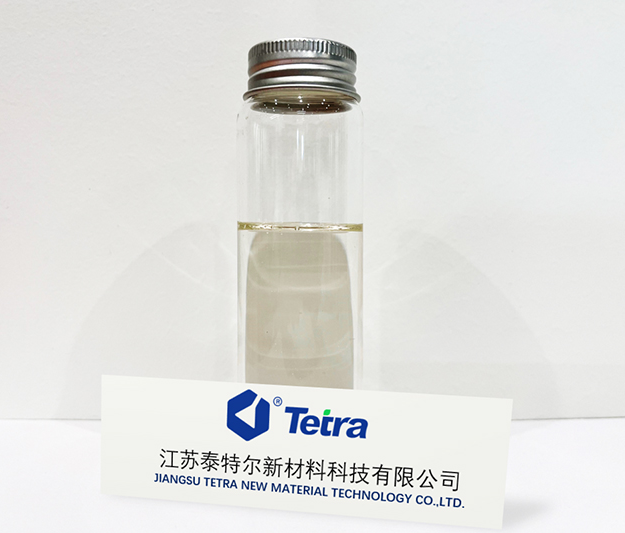
| Appearance | Pale yellow to colorless liquid | Colorless clear liquid | Colorless clear liquid |
| Chroma (APHA) | 100 max | 50 max | 50 max |
| Viscosity at 25°C (mPa·s) | 180 to 450 | 220 to 300 | 220 to 300 |
| Epoxy equivalent (g/eq) | 128 to 145 | 126 to 135 | 126 to 135 |
| Total chlorine | Not specified | Not specified | 100 ppm max |
| Water content | 0.05% max | 0.05% max | 0.05% max |
TTA21S is the entry-level grade — 90% minimum assay, up to 100 APHA chroma, and a wider viscosity range. It is appropriate for applications where the optical path through the potting compound is short, the color tolerance is moderate, and the ionic purity requirement does not specify a total chlorine limit.
TTA21L is the mid-purity grade — 95% minimum assay, 50 APHA maximum chroma, and a tighter viscosity range of 220 to 300 mPa·s. The lower chroma and tighter viscosity make it more suitable for optical applications where color consistency and process repeatability are important, but where a formal total chlorine specification is not required by the reliability team.
TTA21P is the electronic-grade specification — 97% minimum assay, 50 APHA maximum chroma, 220 to 300 mPa·s viscosity, and 100 ppm maximum total chlorine. This is the grade for semiconductor potting compound applications where ionic purity is a reliability requirement, where the optical path is long enough that initial color contributes to the yellowing budget, and where the reliability team requires a documented total chlorine limit on the incoming material COA.
Total chlorine at 100 ppm maximum for TTA21P is the primary ionic purity control for halide-sensitive applications. For applications with more stringent ionic requirements — specific limits on chloride ion, sodium, potassium, or other metals — request the supplier's capability data for these parameters and define the internal acceptance limits in the incoming QC specification. The 0.05% maximum water content specification supports moisture control in processing and storage — confirm the storage conditions and shelf life for the specific grade before finalizing the supply chain plan.
The primary application for TTA21 is optoelectronic device encapsulation — LED potting, optical adhesives, and UV curable products where the combination of low initial color, low viscosity for void-free filling, and cationic curing compatibility provides the optical and process performance that the application requires. For high-power LED modules where the junction temperature exceeds 120°C under sustained operation, the TTA21P grade with its 204°C Tg potential under thermal cationic initiator cure provides the thermal stability margin that prevents softening and optical degradation at operating temperature.
Tetrawill's TDS lists electrical pouring and electronic pouring for outdoor electronic and electrical products as application areas for TTA21. In these applications — outdoor LED drivers, power supply modules, and control electronics exposed to humidity, temperature cycling, and UV — the combination of low ionic contamination, good weathering stability from the cycloaliphatic backbone, and electrical insulation performance provides the reliability profile that outdoor electronics require. The TTA21P grade's total chlorine limit is particularly relevant for these applications, where ionic contamination in the potting compound can accelerate corrosion of PCB traces and component metallization in humid environments.
TTA21's strong dilution ability — a significant viscosity reduction effect when added at more than 20% in a formulation — makes it useful as a reactive diluent in epoxy systems where the primary resin has a higher viscosity than the potting process requires. In this role, TTA21 reduces the system viscosity without adding a non-reactive plasticizer that would reduce the Tg and mechanical properties of the cured system. The reactive diluent function is particularly useful for potting applications where the primary resin is a higher-viscosity cycloaliphatic or aliphatic epoxy and the process requires a lower viscosity for complete void filling without heating the resin above the temperature that the LED assembly can tolerate.
Step one: define the LED module constraints. Identify the maximum operating temperature of the potting compound — based on the LED junction temperature and the thermal resistance of the module — the optical path length through the potting compound, the allowed yellowing index drift after the rated service life, and the required dielectric withstand voltage and insulation resistance.
Step two: select the TTA21 grade. Use TTA21S for applications where the optical tolerance is moderate and ionic purity is not a formal requirement. Use TTA21L for applications where low initial color and tight viscosity consistency are required. Use TTA21P for semiconductor potting compound applications where total chlorine must be documented on the incoming COA and where the highest assay and lowest color are required.
Step three: select the cure route. For applications where UV access to the full potting volume is achievable — shallow potting depths and transparent housings — a UV cationic cure system provides the fastest throughput and lowest thermal load on the LED assembly during cure. For deep potting applications where UV penetration is limited, a thermal cationic initiator cure system provides complete cure through the full potting depth. Tetrawill provides an example thermal cationic initiator cure schedule used to evaluate the 204°C Tg for TTA21P — use this as the starting point for the cure profile development and adjust based on the specific initiator loading and the thermal constraints of the LED assembly.
Step four: run pilot potting trials. Measure the bubble rate and void content in the cured potting mass, the wetting quality on the LED chip and bond wire surfaces, the shrinkage stress on the housing and lens, the adhesion to the housing material, and the optical stability — transmittance, haze, and yellowing index — after heat aging at the rated operating temperature.
Step five: lock the incoming QC specification. Define the acceptance criteria for assay, chroma, viscosity, epoxy equivalent, total chlorine, and water content based on the TTA21 grade specification and the internal reliability requirements. Confirm the COA parameters that the supplier provides with each batch and the internal tests — ionic panel, transmittance, yellowing index, dielectric withstand — that the quality team performs on incoming material.
| Cost Item | Standard Aromatic Epoxy | TTA21 Cycloaliphatic Epoxy (2386-87-0) |
|---|---|---|
| Yellowing rate under heat and UV | Higher — benzene ring absorbs UV and yellows | Lower — cycloaliphatic backbone without aromatic UV absorption |
| Optical haze from voids | Higher — higher viscosity increases bubble risk | Lower — low viscosity supports void-free filling |
| Leakage current from ionic contamination | Higher — uncontrolled chlorine content | Lower — TTA21P total chlorine 100 ppm max |
| RMA rate from optical degradation | Higher — yellowing and haze generate field returns | Lower — stable optical performance reduces return rate |
| Production scrap from bubble defects | Higher — high viscosity requires longer degassing | Lower — low viscosity reduces degassing time and bubble rate |
| Incoming QC friction | Higher — no published ionic purity specification | Lower — documented assay, chroma, chlorine, and water limits |
In 2026, the best LED encapsulation resin is the one that stays clear, resists heat-driven yellowing, maintains electrical insulation integrity in humid environments, and provides the ionic purity that semiconductor devices require — while being controllable in production through documented incoming specifications. CAS 2386 87 0, the cycloaliphatic epoxy 3 4 epoxycyclohexylmethyl 3 4 epoxycyclohexane carboxylate supplied by Tetrawill as TTA21, addresses all four requirements with a three-grade specification system — TTA21S, TTA21L, and TTA21P — that covers the range from general optical applications to electronic-grade semiconductor potting compound requirements with 97% minimum assay, 50 APHA maximum chroma, 100 ppm maximum total chlorine, and a documented Tg of 204°C under thermal cationic initiator cure.
Visit the Tetrawill TTA21 product page to review the full specification, then submit the following details to receive a matched grade recommendation and quotation:
| Parameter | What to Provide |
|---|---|
| Work condition | LED type (mid or high power), indoor or outdoor, humidity and condensation exposure, operating temperature range, expected service lifetime |
| Quantity | Sample, pilot, or monthly consumption volume |
| Size and spec | Potting volume per unit, potting depth, viscosity window, curing method (UV or thermal cationic), line takt time |
| Target metrics | Optical clarity target (APHA, yellowing index, transmittance), allowable yellowing after aging, Tg and thermal target, dielectric withstand and insulation resistance target, ionic limits required |
| Current problem | Heat yellowing, haze or bubbles in cured potting, leakage current, corrosion failures in humid environments, slow degassing, inconsistent batch color or viscosity |
1. What is 2386-87-0?
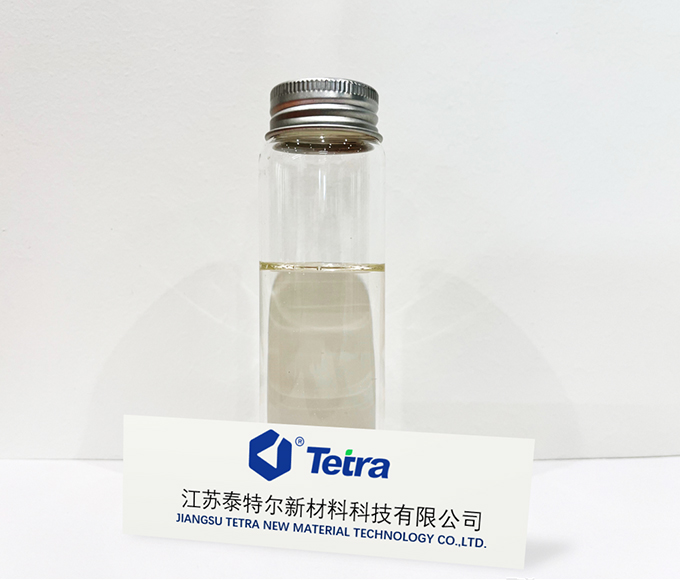
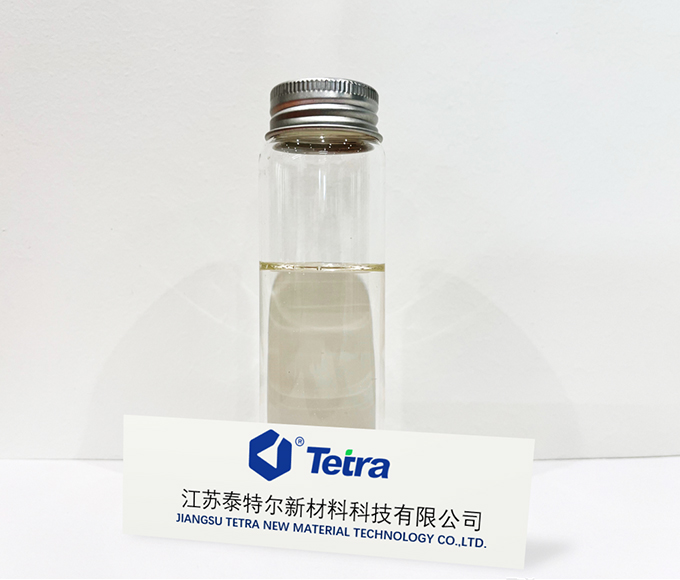
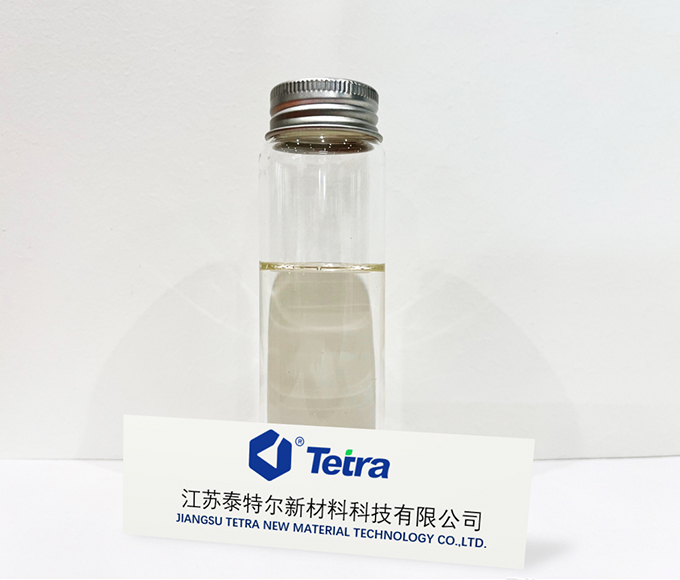
CAS 2386-87-0 is the registry number for 3 4 epoxycyclohexylmethyl 3 4 epoxycyclohexane carboxylate, a cycloaliphatic epoxy resin supplied by Tetrawill as TTA21 in three electronic-grade variants — TTA21S, TTA21L, and TTA21P. It is used as a high transparency epoxy in optical adhesives, UV curable products, and optoelectronic device encapsulation applications, and as an active diluent in epoxy formulation systems where low viscosity and high Tg are required. The TTA21P grade specifies 97% minimum assay, 50 APHA maximum chroma, and 100 ppm maximum total chlorine for electronic-grade applications.
2. 2386-87-0 vs bisphenol-A epoxy vs silicone potting — which is better for LED encapsulation?
Bisphenol-A epoxies are cost-effective and mechanically strong but contain aromatic benzene rings that absorb UV radiation and can yellow under sustained heat and UV exposure — a disadvantage for high-clarity LED optical applications. Silicone potting compounds offer excellent thermal and UV resilience and flexibility, but may differ from epoxy systems in adhesion to housing materials, mechanical support of bond wires, and cost structure. CAS 2386-87-0 is chosen when a low-color, low-viscosity epoxy platform with high Tg potential, controlled ionic purity, and cationic curing compatibility is required for optical and electronic encapsulation — the combination that high-power LED potting and semiconductor potting compound applications demand.
3. Why pay more for an electronic-grade epoxy like TTA21P for LED potting?
The ROI comes from three measurable sources. Fewer optical rejects — the low initial chroma and void-free filling from low viscosity reduce the scrap rate from haze and bubble defects in production. Fewer field failures — the total chlorine limit and cycloaliphatic backbone reduce the leakage current and corrosion failures that ionic contamination and UV-driven yellowing generate in outdoor and high-humidity applications. Better warranty cost control — a potting compound that maintains its optical and insulation performance across the rated service life reduces the RMA rate and the warranty liability that optical degradation generates in high-volume lighting programs.
4. Do we need to modify our production line to use 2386-87-0?
No major production line modification is required. The primary process adjustments are cure schedule optimization — selecting the UV or thermal cationic initiator loading and cure profile that achieves the target Tg for the specific application — degassing procedure confirmation for the TTA21 viscosity range, and incoming QC procedure update to include the assay, chroma, viscosity, total chlorine, and water content checks that the TTA21 grade specification requires. Tetrawill provides an example thermal cationic initiator cure schedule used to evaluate the 204°C Tg for TTA21P as a starting point for cure profile development.
5. What parameters should I provide for correct TTA21 grade selection and quoting?
LED power and heat profile (junction temperature and thermal resistance), potting geometry and depth, curing method constraints (UV access availability or maximum thermal cure temperature), viscosity requirement at the dispensing temperature, optical clarity and yellowing targets (APHA, yellowing index, transmittance after aging), dielectric withstand and insulation resistance targets, and electronic-grade purity requirements — total chlorine limit, water content limit, and any internal ionic panel or metal content specifications. Providing the current failure mode — yellowing, haze, leakage current, or corrosion — allows the most accurate grade recommendation and cure schedule guidance.